
Review Truck Component Interfaces Before Approving a Sample
A truck component’s bores and mounting faces must match the intended assembly and duty. Relia can review that relationship with the selected material, blank route and sample scope. Use the guide to prepare a component definition that is more useful than choosing a similar-looking catalogue shape.
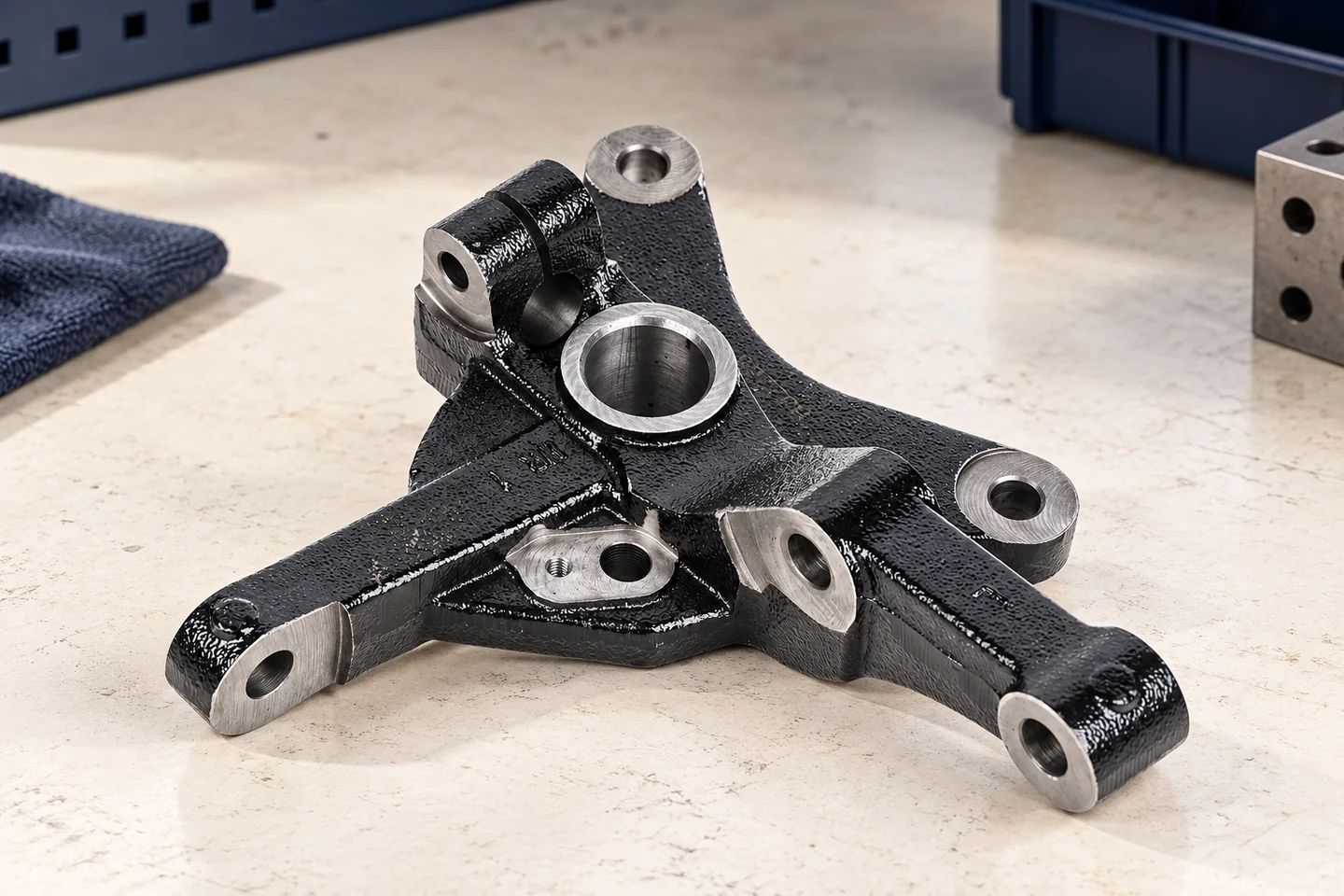
- Part identity
- Drawing, version and mating arrangement
- Route comparison
- Cast or forged blank in the same final condition
- Sample evidence
- Related bores, seats and required material results
Identify the Part beyond Its Catalogue Reference
Relia reviews the truck component through its load-transferring contacts. An individual bore can be on size while its relationship to a seat or second bore is wrong for the assembly. Relia needs those relationships defined with the duty and ordered metal condition. The proposal can then address the appropriate blank, treatment, machining setup and required sample evidence as one manufacturing scope.
Part
Reference and drawing revision
Configuration
Relevant assembly and mating interfaces
Acceptance
The approval basis for the intended use
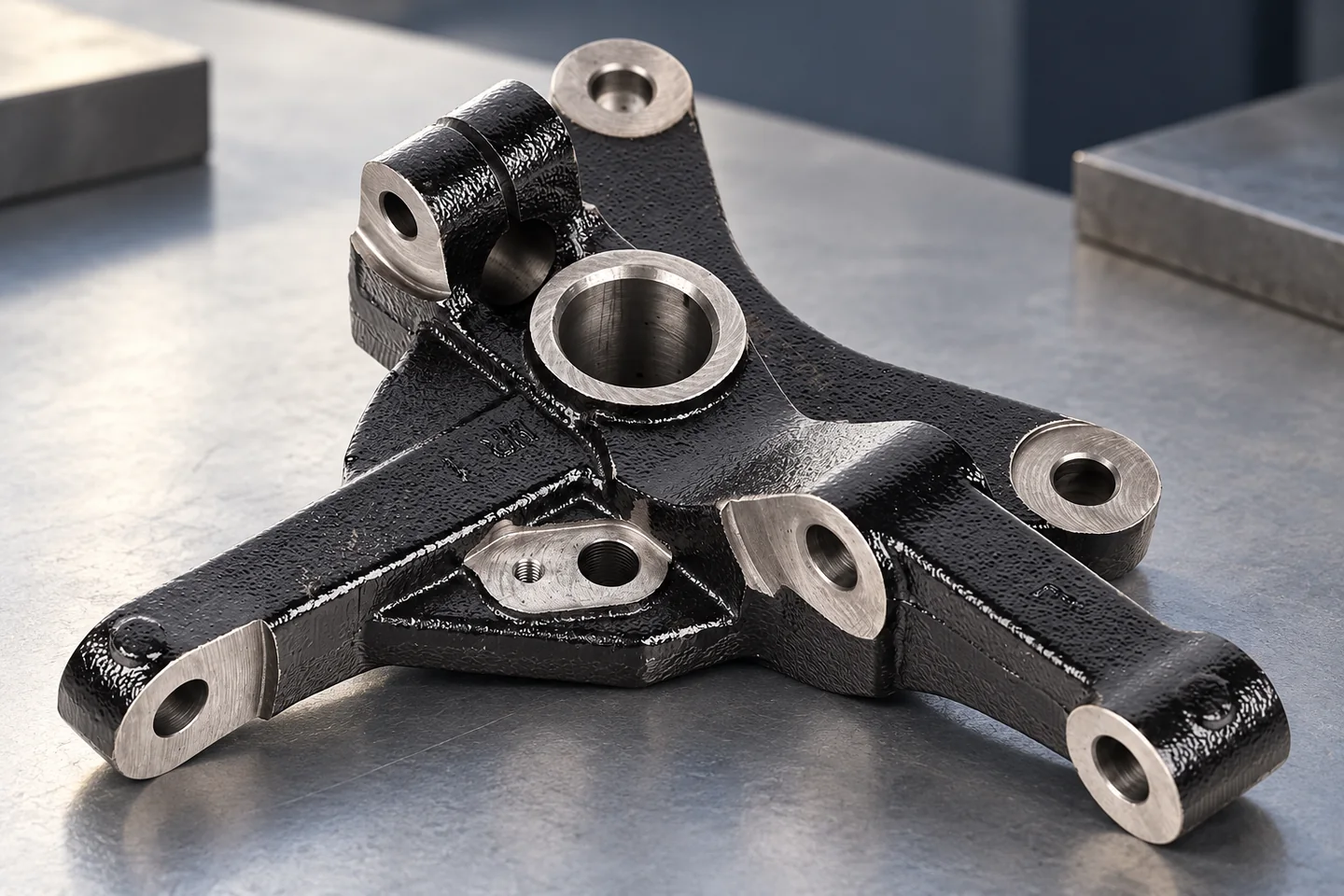
Machined Bores and Mounting Faces Control the Fit
Mark the important bore, contact surface and hole relationships. We connect those features with the proposed forming and machining work. A component can look correct externally while still needing precise definition of the interfaces that locate it in your assembly.
Service Duty Belongs in the Material Discussion
Tell us the loading and operating conditions relevant to your design. Include the specified grade, treatment and supplied condition. We keep those requirements together so a process comparison or price proposal does not quietly substitute a different material or acceptance basis.
Application
Relevant loading and service conditions
Specification
Grade and required supplied condition
Evidence
Material and component records needed for approval
Compare Routes at the Loaded Features
The useful comparison ends at the finished interfaces, not at the cast or forged appearance. The requested sample should reflect the route being offered for supply.
- 01Duty and material
- 02Blank and treatment
- 03Machining
- 04Sample approval
| Production stage | Operation and purpose | Control to agree |
|---|---|---|
| Duty and material | Identify load contacts, grade and required condition. | The component’s actual drawing and service requirement. |
| Blank and treatment | Review the selected casting or forging and specified treatment. | Section transitions and integrity-sensitive regions. |
| Machining | Establish the related bores, seats and mounting faces. | Clamping, datum and contact-surface requirements. |
| Sample approval | Compare dimensions and agreed material or test results. | The assembly requirement and the buyer’s approval responsibility. |
Mating-Part Information Makes the Review More Precise
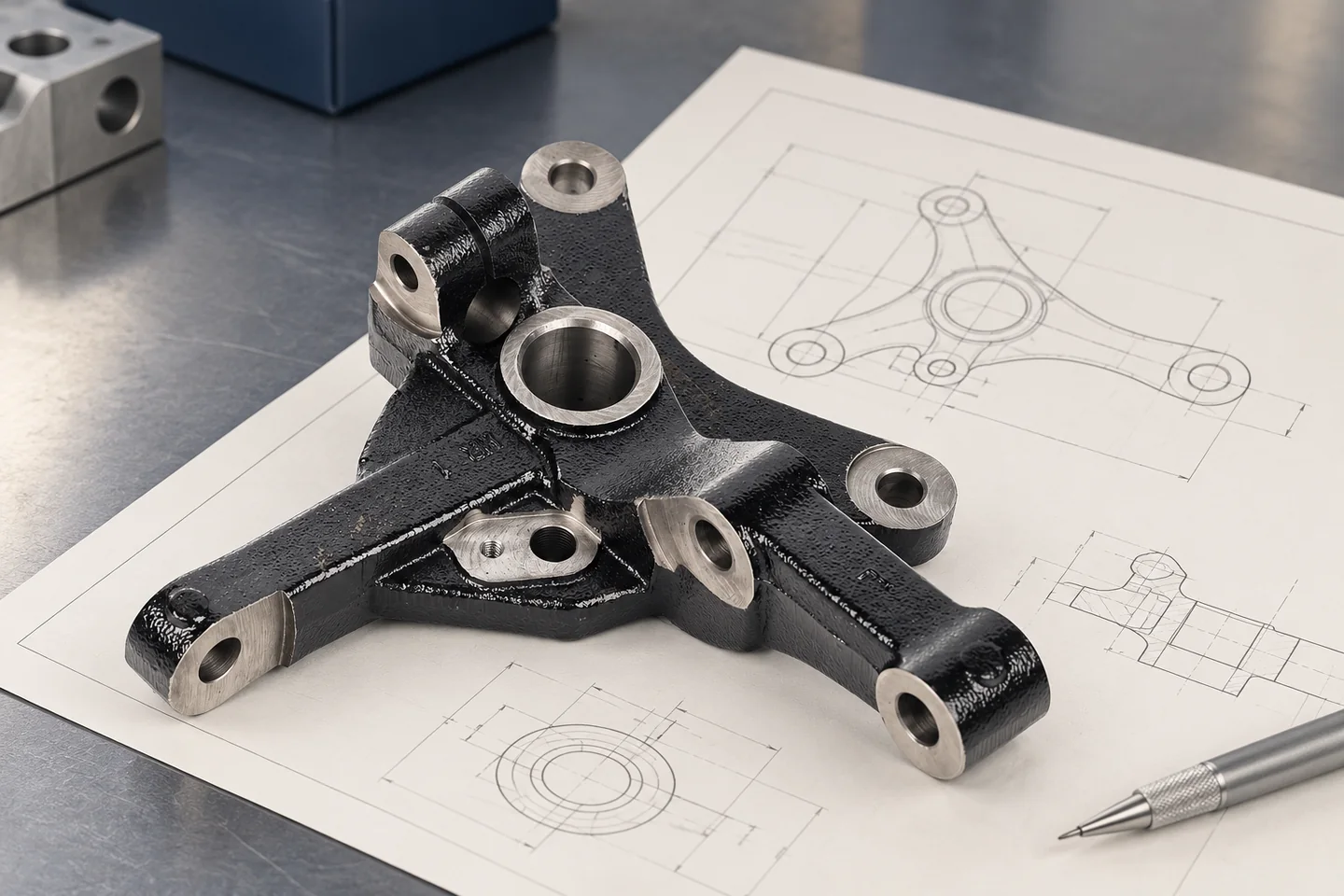
A component drawing may not explain every contact or clearance in the assembly. Include the relevant mating details and identify fixed interfaces. We can then focus the proposal on the relationship your team needs instead of relying on assumptions drawn from an isolated part photograph.
Functional Approval Needs Its Own Evidence
Dimensional conformity and material records are parts of the approval discussion, not automatic proof of application performance. Identify the programme-specific tests or qualifications your team requires. We keep those requirements separate and visible before a component supply commitment.
Material
Specified grade and condition evidence
Geometry
Critical interface measurements
Application
Relevant tests and approval requirements
Repeat Supply Must Use the Correct Revision
A later design change can affect machining, material or the evidence needed for approval. We discuss the changed requirement and its order boundary explicitly. This keeps repeat enquiries connected to the correct component rather than to a previous photograph or an earlier sample alone.
Approved basis
Drawing, material and acceptance scope
Change
The revised requirement and affected features
Next supply
The reference agreed for the order
Samples Connect the Proposal with the Assembly Review
We align the sample condition and requested records with the requirements your team needs to assess. Review the physical interfaces and any applicable application evidence against the approved reference. Deviations remain visible before the next supply or qualification decision.
Send the Part Definition and Approval Scope Together
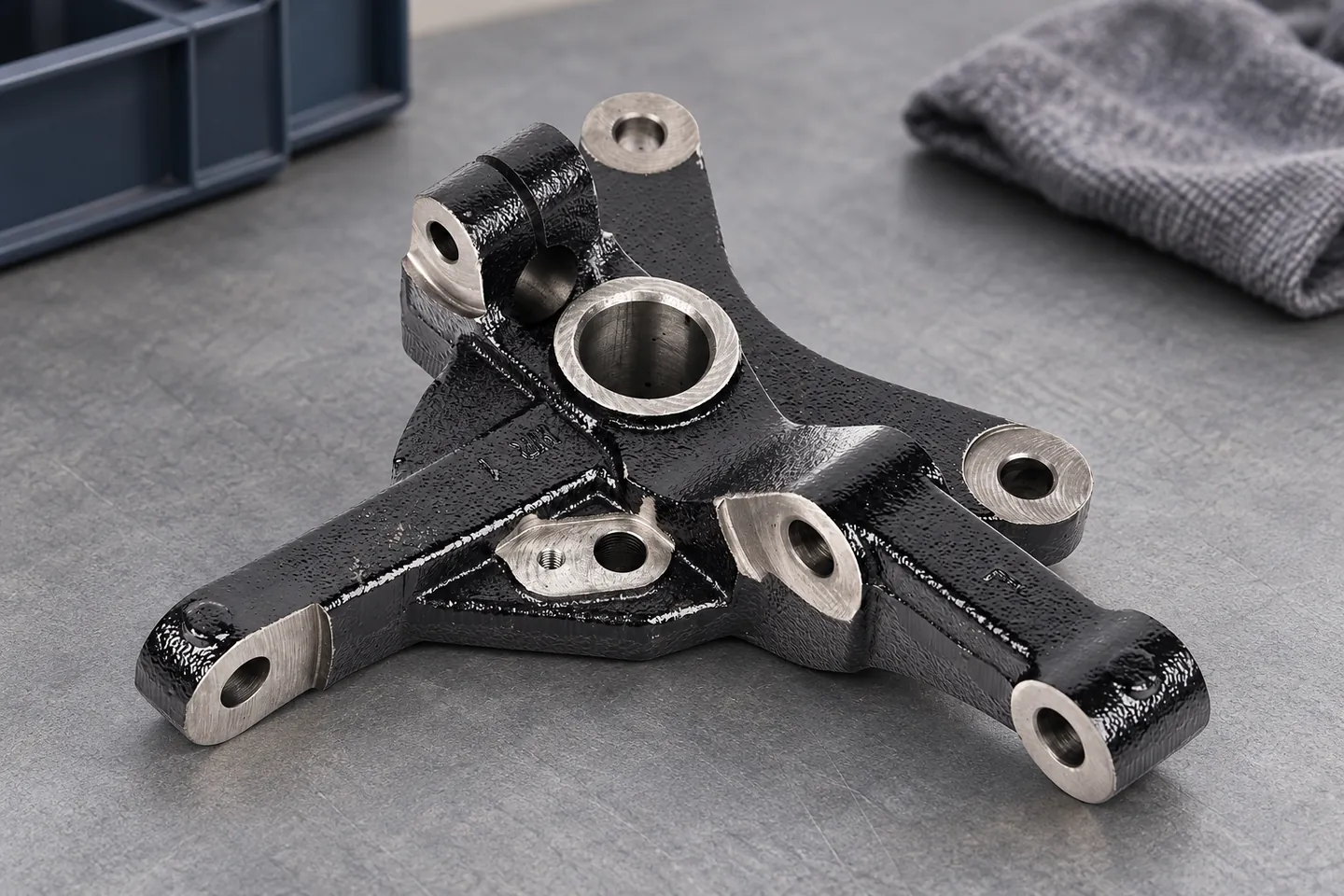
Share the drawing revision, material, quantities and required finished condition. Add the assembly context and qualification requirements relevant to the component. We can then discuss a proposal with route, machining, sample and acceptance boundaries clearly identified.
A useful first message
- Part number, revision and assembly drawing
- Material, condition and service duty
- Required fitted interfaces
- Sample and application acceptance scope
The email link opens an editable draft. Share the information you have and identify any open points.
Relia Casting · Project Contact[email protected]Phone: +86 185 6176 2631WhatsApp: +1 404 203 0971Qingdao office: No. 96 Shuyuan Road, Qingdao, Shandong, ChinaRelia Casting homeMore relevant component and technical pages
Product illustrations explain catalogue-based geometry. The agreed drawing, material specification and order define the supplied component. Manufacturing and project acceptance requirements are reviewed for the actual part.