
When buyers compare gray cast iron vs ductile iron, the real decision is not just material type — it is about strength, machinability, vibration behavior, and long-term failure risk.
Although both belong to the cast iron family, their graphite structure makes them behave very differently in service.
This guide explains:
- The difference between gray iron and ductile iron
- Mechanical property comparison
- Typical industrial applications
- Global market trends
- How procurement teams should specify them
What Is the Difference Between Gray Cast Iron and Ductile Iron?
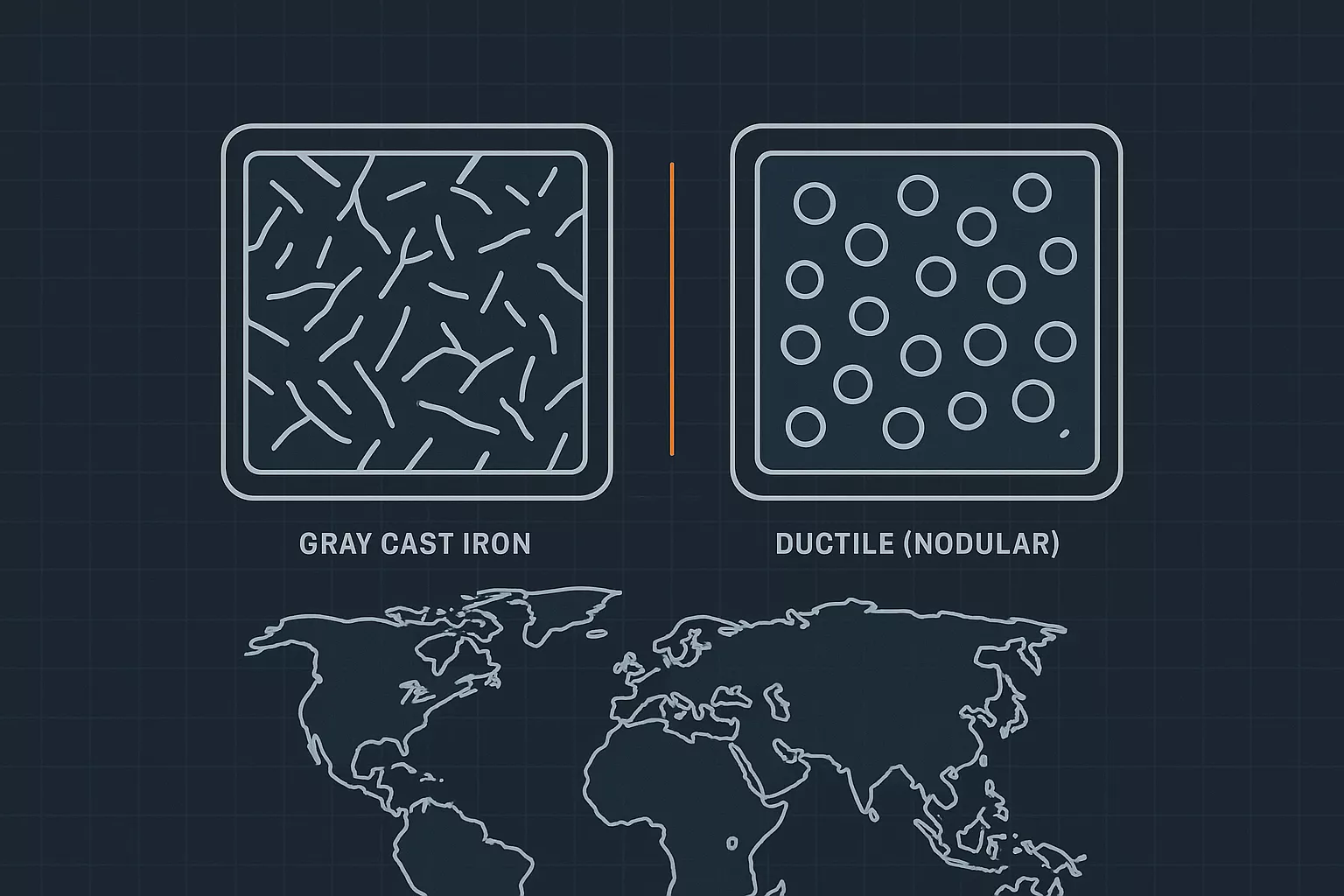
The primary difference lies in graphite shape:
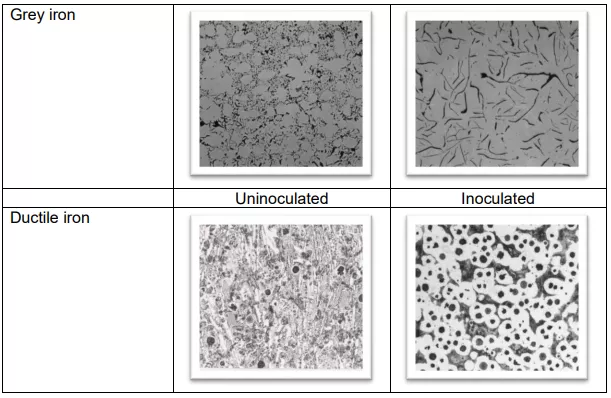
- Gray cast iron contains flake graphite
- Ductile iron contains spherical (nodular) graphite
This microstructural difference directly impacts strength, ductility, and crack resistance.
Why Graphite Shape Matters
Flake graphite acts like internal crack initiators, making gray iron:
- More brittle
- Lower in tensile strength
- Excellent in vibration damping
Spherical graphite reduces stress concentration, giving ductile iron:
- Higher tensile strength
- Better elongation
- Improved fatigue resistance
Gray Cast Iron vs Ductile Iron: Mechanical Property Comparison
| Property | Gray Cast Iron | Ductile Iron |
|---|---|---|
| Graphite Shape | Flake | Nodular |
| Tensile Strength | Lower | Higher |
| Yield Strength | Not clearly defined | Clearly defined |
| Elongation | <1% | 5–18% |
| Impact Resistance | Low | High |
| Vibration Damping | Excellent | Moderate |
| Machinability | Excellent | Good |
In most structural applications, ductile iron is significantly stronger than gray iron.
Applications: When to Choose Each Material
Choose Gray Cast Iron When:
- Vibration control is critical (machine bases, housings)
- Thermal conductivity matters
- Cost and machinability dominate
Choose Ductile Iron When:
- Impact or bending loads exist
- Fatigue performance matters
- Safety-critical parts are involved
- Strength-to-weight optimization is required
Standards and Grades (U.S. Market)
In U.S. sourcing:
- Gray iron is typically specified under ASTM International ASTM A48/A48M
- Ductile iron is usually specified under ASTM A536
Always include:
- Grade
- Mechanical requirements
- Test coupon method
- Inspection criteria
“Cast iron” alone is insufficient for RFQs.
Global Market Share Trends
According to industry summaries from the World Foundry Organization:
- Iron castings remain one of the largest material groups globally.
- Within iron castings, gray iron historically holds the largest share.
- Ductile iron has shown stronger growth in automotive and infrastructure sectors.
Note: Many global reports aggregate total iron castings; gray vs ductile splits are often revenue-based estimates.
Cost Comparison: Total Landed Cost Perspective
Gray iron generally offers:
- Lower raw material cost
- Easier casting control
- Lower machining cost
Ductile iron may cost more initially but can:
- Reduce warranty risk
- Allow thinner sections
- Improve service life
- Reduce redesign cost
For procurement, the decision should be based on total lifecycle cost, not just casting price.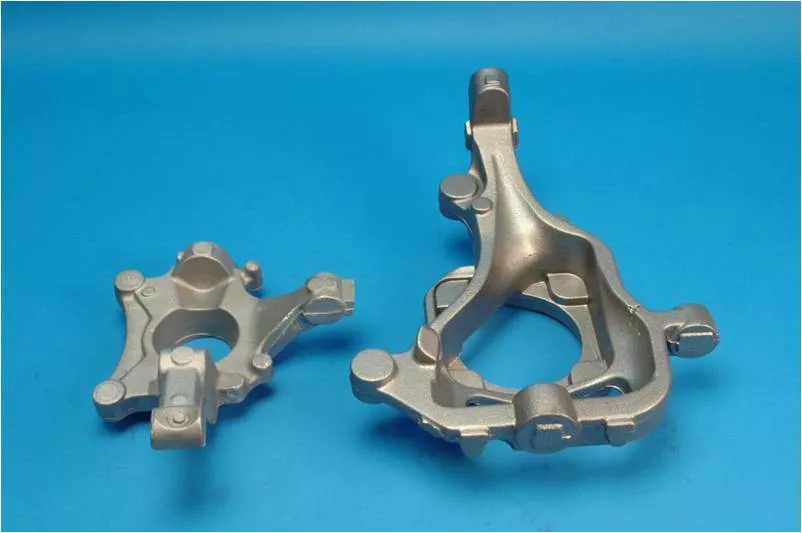
Procurement Checklist
Before requesting quotes:
- Define iron family + governing standard
- Specify mechanical grade
- Define critical surfaces and tolerances
- Clarify inspection requirements
- Confirm supplier melt control capability
FAQ
Is ductile iron stronger than gray cast iron?
Yes. Ductile iron typically offers significantly higher tensile strength and better fatigue resistance.
Why is gray cast iron still widely used?
Because of its superior vibration damping, machinability, and lower cost.
Can ductile iron replace steel?
In many medium-load applications, ductile iron provides steel-like performance at lower cost.
Final Thoughts
Understanding the difference between gray cast iron and ductile iron is essential for reducing sourcing risk and optimizing long-term performance.
Selecting the correct material requires alignment between engineering requirements, failure modes, and supplier capability.