
Convert Welded Assemblies to Integrated Cast Components
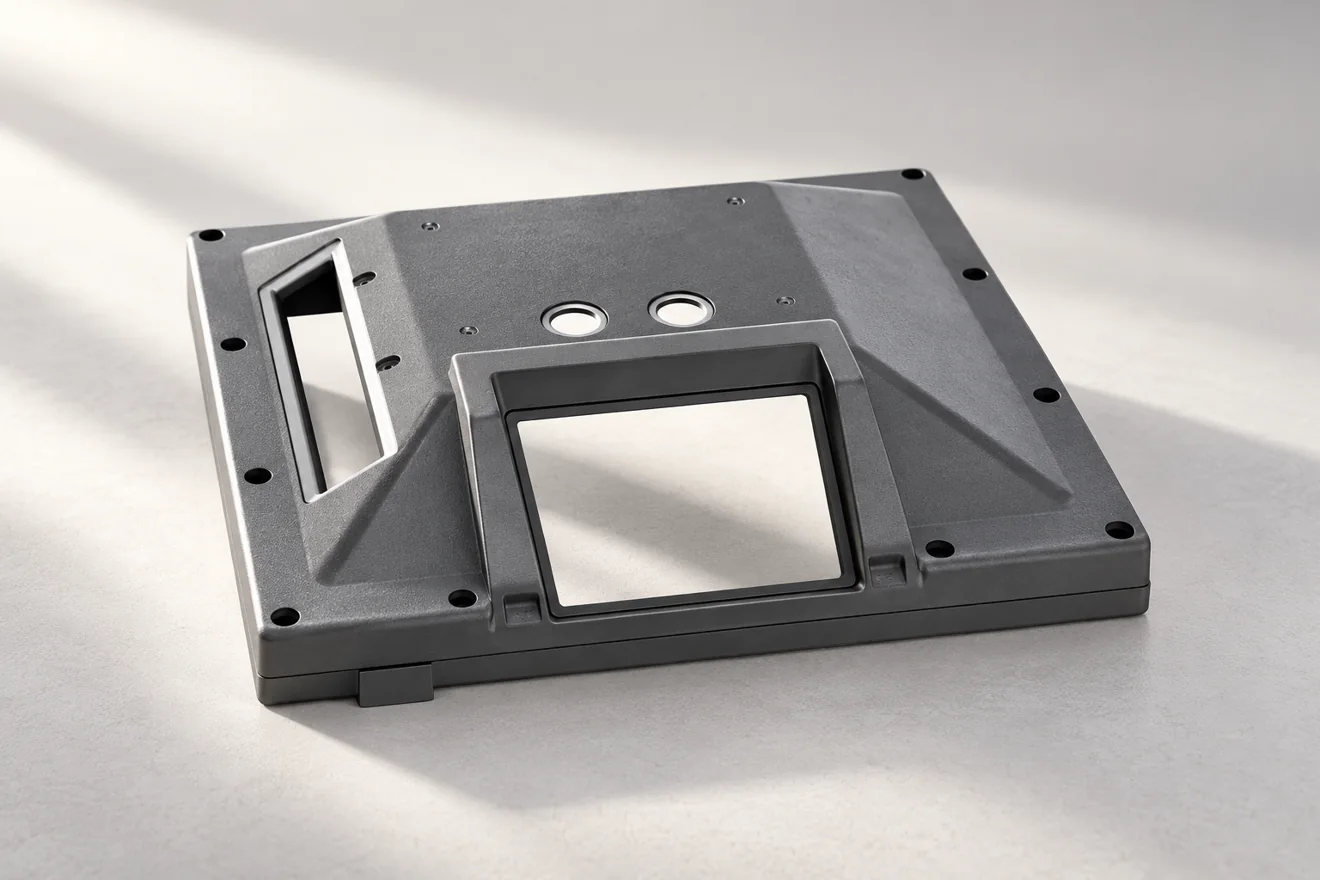
Relia reviews welded assemblies for a possible integrated casting, starting with the functions and contacts that must remain. We assess castable sections, internal access and final machining, while keeping serviceable parts separate where needed. Design changes and sample validation must be approved before the supply route changes.
Read the overview and page sections
We start with the function of the complete assembly and the contacts that must remain. The useful proposal shows which joints can disappear, which serviceable parts stay separate and how the cast blank will be machined and accepted.
An Integrated Shape Keeps the Assembly Requirements Visible
Relia connects the assembly's load path and working interfaces with a practical cast form. Ribs, openings and mounting regions replace separate fabrication details only where the approved design allows it. We keep maintenance access and separately serviceable items visible while reviewing the blank, fixture arrangement and finished relationships that the combined component must preserve.
- Assembly drawing
- Working relationships and load path.
- Installation data
- Contacts, clearances and service access.
- Joint information
- Current welds, positioning work and known concerns.
- Cast proposal
- Practical ribs, walls and transitions for approved integration.
Identify which joints may disappear and which items must remain replaceable. One casting does not automatically align every finished contact or preserve maintenance access.
Replace Welded Junctions with Castable Transitions
A welded intersection cannot simply become a solid lump of cast metal.
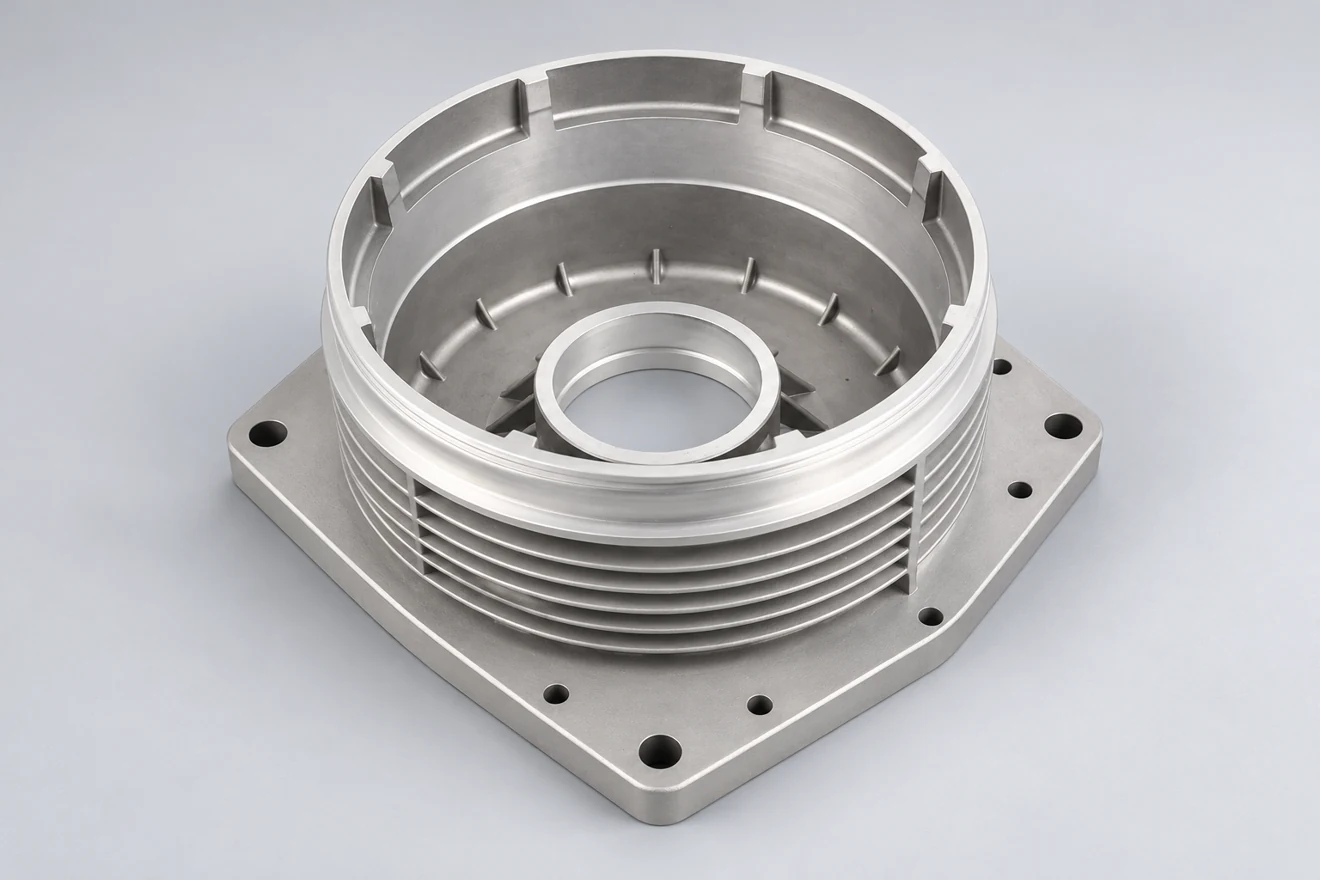
- Replace welded masses with castable transitions
- Check the revised shape against the original assembly
Open the manufacturing route and detailed review
Replace welded masses with castable transitions
Thick junctions cool differently from nearby walls and need a workable feeding arrangement. Ribs, blended transitions and openings can carry the intended shape while avoiding unnecessary local mass. The mold or pattern also needs a practical release and internal-cleanup route.
Check the revised shape against the original assembly
Relia can relate those changes to machining and assembly. A mounting plane or bearing location may still need a finish cut after the integrated blank is made. Review the revised drawing against the original load path and service clearances, so fewer welds do not introduce an inaccessible fastener or an unserviceable assembly.
04 / 10Component decisions
Decide Which Joints Should Disappear
Replacing a weld changes the manufacturing route and may also change the local section, inspection access and repair arrangement.
| Assembly feature | Potential benefit of integration | Constraint to keep visible |
|---|---|---|
| Repeated welded location | Fewer joint-positioning steps | Final datum and dimensional acceptance |
| Heavy plate junction | A shaped transition can replace a joint | Feeding, section thickness and local soundness |
| Enclosed cavity | Fewer assembled pieces | Core support, removal and cleaning access |
| Service connection | Possible reduction in permanent joints | Parts that must remain replaceable |
Establish Common Datums for the Integrated Component
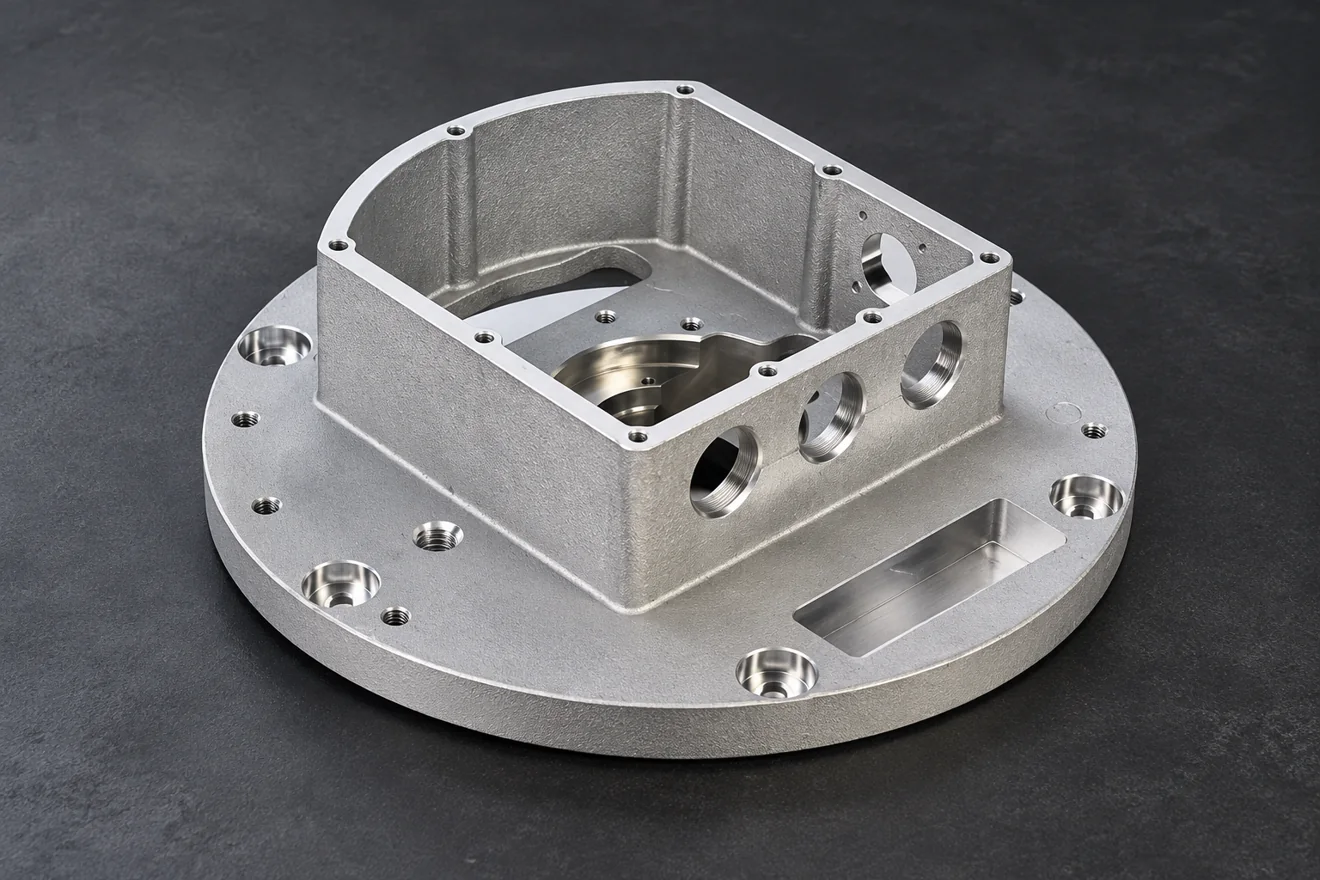
Integration removes some joints, but it does not automatically align the finished contacts. Identify the mounting plane, related bore axes and fixing positions that locate the complete assembly. The cast design must leave stock and accessible holding regions so machining can establish those relationships without distorting a broad plate or thin rib.
Relia reviews the casting and CNC references together. A rib replacing a welded stiffener needs a workable section transition, while an opening may still be required for service access or cleanup. Approve those geometric changes before the trial, then check the finished sample against the same assembly references used to assess the original construction.
Material and Duty Are Reviewed Together
The proposed cast material and treatment must be specified for the component's duty. Do not assume a cast grade is equivalent to the plate or bar used in the welded assembly. Identify loads, temperature, environment and applicable project requirements so the material decision can be supported by the agreed evidence.
07 / 10Component decisions
Review the Integrated Shape Before Tooling
The casting proposal needs more than a solid model made by joining the existing plates. It needs a manufacturable section layout and a way to finish the working contacts.
| Stage | Design task | Review output |
|---|---|---|
| Functional map | Identify loads, joints and service interfaces | Features to integrate or retain separately |
| Casting layout | Review walls, ribs, radii and internal access | Proposed blank sections |
| Machining plan | Choose locating areas and stock at final contacts | Finished-interface drawing |
| Sample acceptance | Assess geometry and specified duty requirements | Approval scope for the integrated part |
Compare the Whole Manufacturing Scope
Compare tooling, machining, treatment, inspection, assembly work and handling for both routes. Keep design approval and sample work visible as initial costs. The quotation should support your particular demand and acceptance requirements, without assuming a saving simply because welding operations have been removed.
Send the Details for Your Component Review
Tell us what you need to buy and the condition you need to receive. Relia Casting will review the component, manufacturing scope and requested evidence with you before an order is agreed.
- Assembly and individual-part drawings
- Mounting interfaces and relevant duty
- Current material and construction
- Proposed changes for engineering review
- Required qualification and quantities
No. 96 Shuyuan Road, Qingdao, Shandong, China
About our component supply · Contact details and project enquiry