
Custom Brass Flanges with an Agreed Casting or Forging Route

Compare a cast and a forged brass-flange proposal against the same finished drawing, actual alloy and order quantities. Relia reviews the bore, shoulders, contact faces and required condition, then identifies tooling and the machining that remains in each route. You can compare the delivered connection and its acceptance scope before choosing a starting blank.
Read the overview and page sections
We start with the actual alloy, mating connection and quantities. That lets you compare tooling, machining and final condition on equal terms, instead of choosing the route from the colour or outside appearance of a sample.
One Finished Flange Provides a Fair Route Comparison
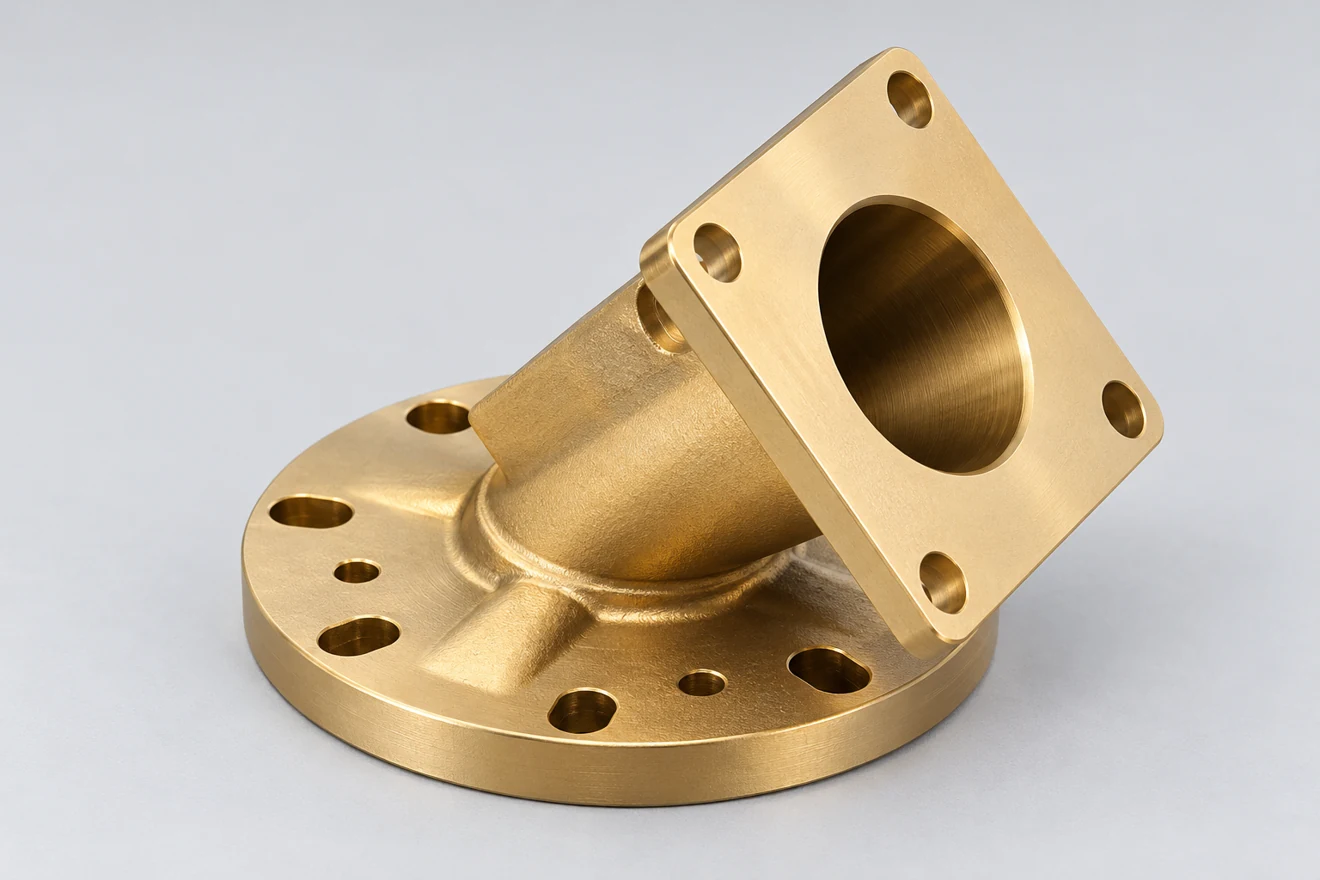
Relia treats the flange bore, shoulder and broad contact faces as related features. We review what the blank must provide and what turning or other specified machining must establish. The selected material and delivered condition remain explicit in either proposal, giving your team a consistent basis for comparing forming alternatives and finished-interface acceptance.
03 / 10Component decisions
Compare Blank Routes Against One Finished Flange
Keep the final interface requirements fixed while reviewing the blank. This makes differences in tooling, stock and material condition visible.
| Requirement | Casting proposal | Forging proposal |
|---|---|---|
| Material | Specified cast alloy and condition | Specified forging alloy and condition |
| Section layout | Feeding, shrinkage and cleanup access | Die fill, parting and deformation route |
| Machining stock | Allowance at bore and contact faces | Allowance at bore and contact faces |
| Acceptance | Required material and final dimensional records | Required material and final dimensional records |
Choose the Blank Route Around Sections and Final Contacts
Casting creates the flange shape through a mold and feeding arrangement; forging develops a blank through deformation and its own tooling sequence.
- Finished definition
- Blank proposal
- Interface work
- Acceptance
- Compare casting and forging on the same part
- Include turning and drilling in the route comparison
Open the manufacturing route and detailed review
Compare casting and forging on the same part
The suitable route depends on the chosen alloy, section changes and order pattern. Neither route removes the need to define the working bore, face position or threaded connection on the finished drawing.
Include turning and drilling in the route comparison
Relia can compare the proposed blank with the final turning, drilling or milling needed for those contacts. Stock, tool access and any specified surface operation are considered before the routes are priced. This keeps the comparison focused on an installable flange, including the recurring work that remains after forming.
Machine the Bore and Faces from a Coherent Setup
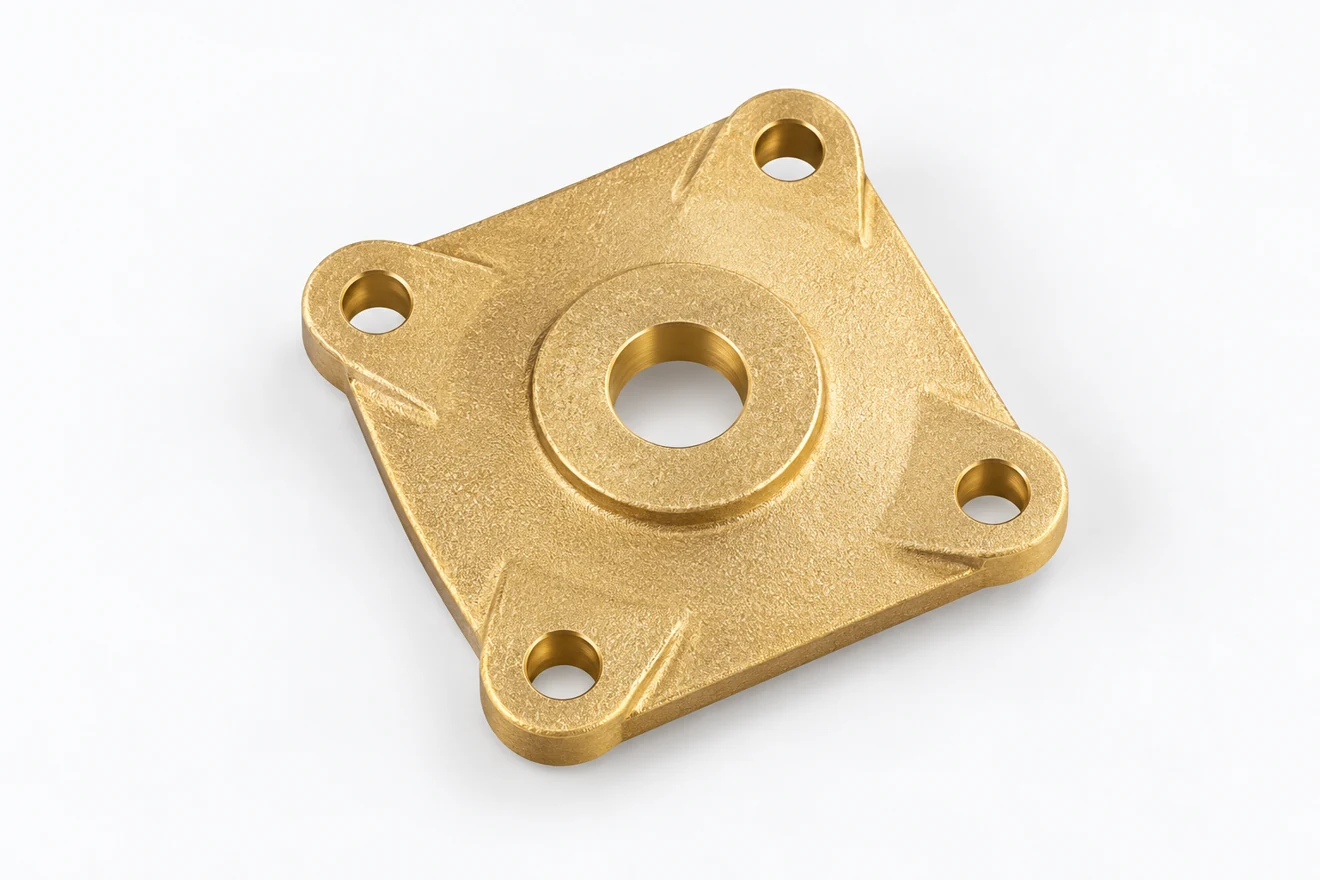
A flange may have a correct bore diameter while its shoulder or contact face sits incorrectly relative to that bore. Identify which feature locates the part in the mating assembly, then use that relationship to select the machining reference. The blank needs accessible clamping and local stock where these contacts will be created.
Relia reviews turning and any fixing-hole operations as a connected sequence. Define the relevant face-to-bore relationship and edge conditions rather than asking only for a smooth finish. If later treatment or protection affects the contact surface, specify the state in which the finished measurements apply and protect that state during delivery.
06 / 10Component decisions
Relate the Bore to the Actual Working Faces
For an annular part, a correct bore size alone does not establish a usable flange. Its position and orientation relative to the contact faces matter as well.
| Step | Control point | Result to agree |
|---|---|---|
| Define contacts | Identify mating bore and flange faces | Functional drawing reference |
| Select blank | Review one alloy and route at a time | Proposed stock and condition |
| Finish interfaces | Machine the bore and related faces | Size, form and positional limits |
| Accept delivery | Include service-related checks where required | Material and dimensional acceptance package |
Surface Requirements Reflect the Application
Identify appearance, corrosion protection and functional contact requirements separately. A bright surface may be acceptable visually while saying little about suitability for the service environment. Where pressure, food contact or another project requirement applies, define it explicitly rather than borrowing an approval from a similar fitting.
Compare Tooling and Recurring Work Separately
The quotation should distinguish tooling or sample work from the flange, machining, inspection and packing. Compare route proposals at the same quantity and finished scope. Keep any open feasibility or qualification item visible before approving the lower total or unit price.
Initial commitment
- Pattern or die scope
- Sample work and approval
- Tool ownership and revision terms
Repeat release
- Blank and machining work
- Agreed inspection records
- Surface protection and packing
List exclusions and open feasibility items beside each proposal. A lower unit price is meaningful only after these boundaries match.
Send the Details for Your Component Review
Tell us what you need to buy and the condition you need to receive. Relia Casting will review the component, manufacturing scope and requested evidence with you before an order is agreed.
- Flange drawing and connection details
- Actual alloy and delivered condition
- Permitted forming routes for review
- Quantity and finished-interface requirements
- Material and inspection records
No. 96 Shuyuan Road, Qingdao, Shandong, China
About our component supply · Contact details and project enquiry