
Lost Foam Casting for Integrated Component Shapes
Relia reviews lost-foam casting for your drawing-based panel, bossed plate or ribbed housing. We assess the foam shape, joints, metal specification and finishing access together. Integration is useful only when the trial confirms the critical sections, cleanup and finished interfaces your equipment needs.
Send the component you want to integrate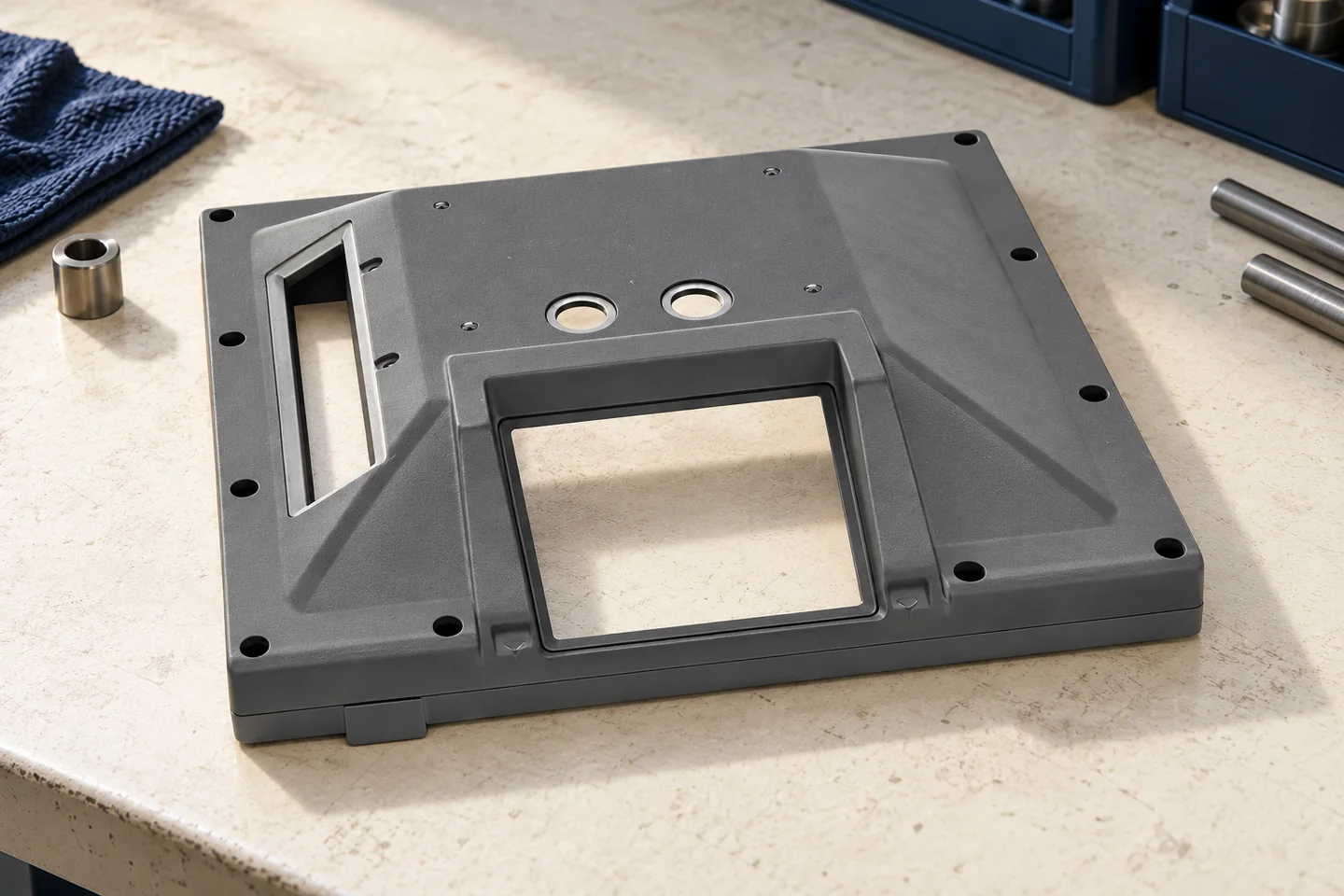
- PatternA stable expendable representation of the blank.
- IntegrationConnected walls, bosses and openings.
- AcceptanceThe finished geometry and required internal condition.
Integration Starts with the Actual Component
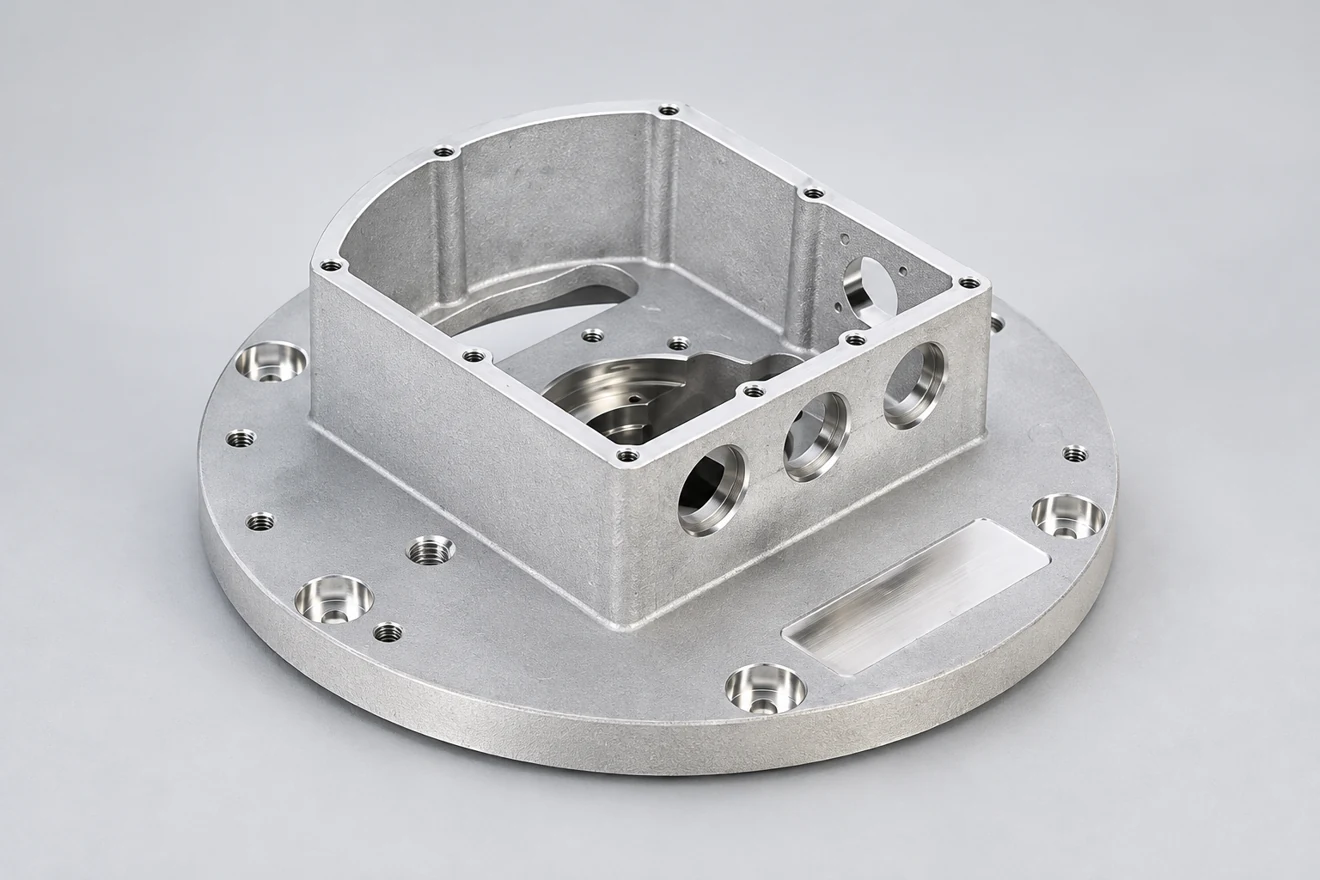
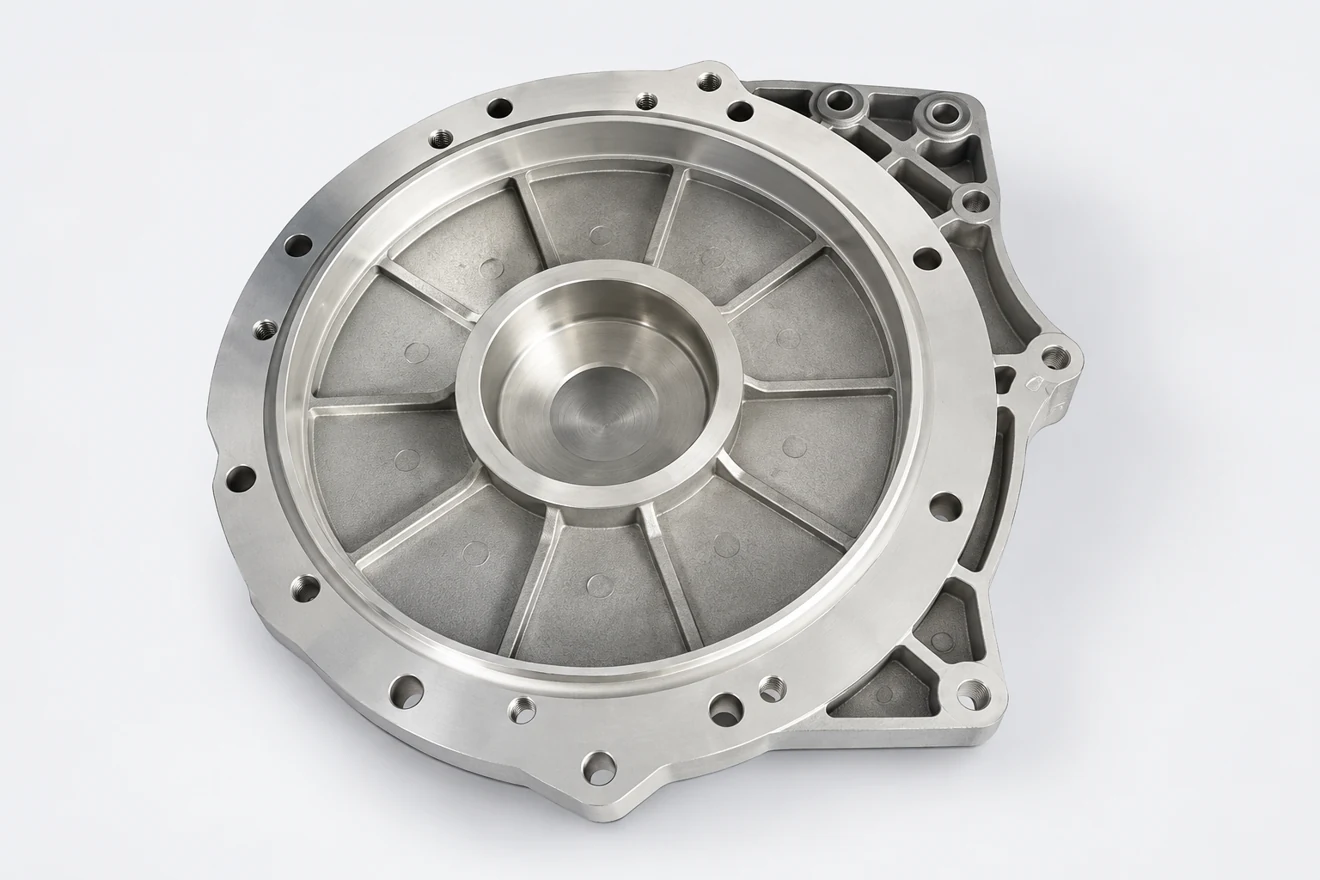
Relia reviews the catalogue’s windowed panel, bossed mounting plate and ribbed housing as separate custom designs. Their openings and junctions raise different questions about foam handling, sand support and later cuts. The selected material and overall dimensions belong in that review; a photograph of an integrated form does not establish a common alloy or a maximum production envelope.
- PanelWindows, mounting holes and broad-face support.
- PlateBosses, wall transitions and local stock.
- HousingRibs, enclosed spaces and machining access.
The Foam Remains in Place During Pouring
Unlike an investment pattern removed before pouring, the foam occupies the proposed component shape inside the supported mold. The metal replaces it during filling. The coating and surrounding sand must support the geometry and allow the relevant decomposition products to leave. These interactions make the pattern system and filling plan part-specific, especially around thin regions and remote junctions.
- Foam formThe expendable blank geometry.
- Coating and supportA prepared pattern supported for casting.
- Metal replacementFilling assessed for the actual material and sections.
Pattern Joints and Handling Can Reach the Metal Surface
A large or complex foam shape may be assembled from sections. Joint position and excess adhesive can affect the reproduced surface, while a delicate window or rib can be displaced during handling. Identify vulnerable regions before the pattern is committed. The finished casting cannot be expected to correct a geometry error already carried by the expendable pattern.
- JoinLocate pattern joints away from critical regions where feasible.
- HandleSupport broad panels and narrow bridges.
- CheckThe assembled pattern’s important geometry.
Heavy Bosses and Thin Plates Need a Shared Plan
The catalogue mounting plate combines a shallow face with a tall neck and smaller raised regions. That creates local changes in section and different machining requirements. Review the boss-to-plate transition, filling path and stock as one problem. Extra metal at a tall feature does not automatically provide the correct wall or a clean finished bore after the plate is located.
The model links all three regions. More metal at the boss does not establish a sound transition or the required wall after machining.
A Broad Part Needs Consistent Machining Support
A plate or cover can be temporarily flattened by its clamps and change shape when released. Define the support condition used for machining and for the final flatness check. The ribbed-cover example connects the central feature with its outer contacts, while the windowed panel makes the importance of broad-face support visible. Measure the condition the customer actually accepts, not just the part held in a fixture.
- LocateThe real blank and stable support regions.
- MachineContacts without forcing a false shape.
- MeasureThe agreed free or supported final state.
Internal Cleanup Remains a Separate Requirement
An integrated shape may remove some separate mold-core arrangements, but it does not remove the need to clean accessible cavities and machined intersections. Identify the openings used for sand and coating removal, the regions affected by later cutting and the residue acceptance relevant to the part’s use. A clean exterior is not a substitute for an agreed internal check.
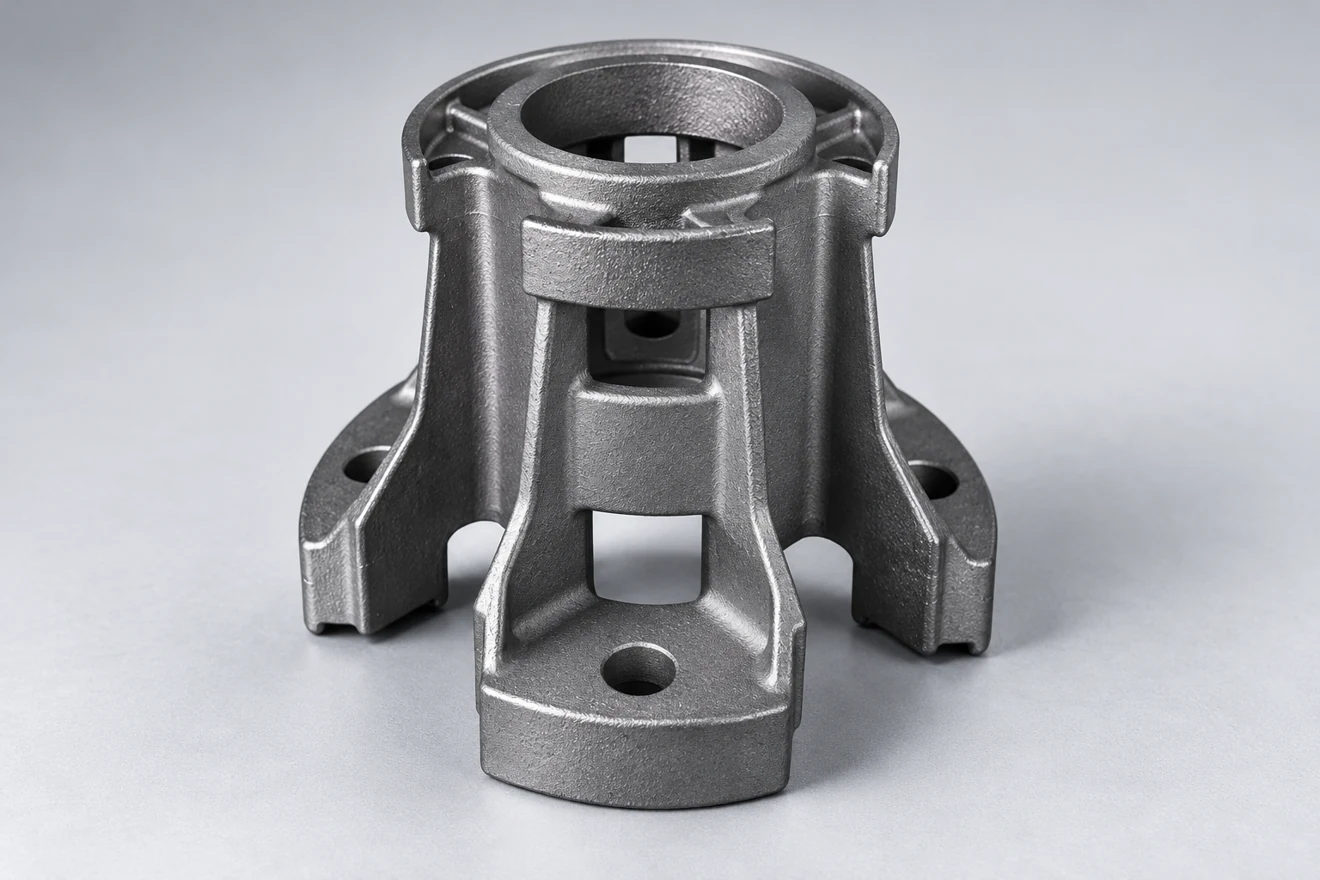
- AccessOpenings that allow cleanup.
- SequenceCast cleaning followed by any affected CNC regions.
- AcceptThe agreed internal surface and residue condition.
A Trial Resolves the Main Integration Risk
Use the trial to assess the actual uncertain region: a delicate foam window, a thick-to-thin junction, a hard-to-clean cavity or a broad machined face. Define the geometry and any integrity check before the sample is made. Relia obtains your sample approval against the agreed requirements before batch production is arranged under the order.
- Pattern riskHandling, joint and section-sensitive regions.
- Casting riskThe agreed local condition after filling and cleanup.
- Finished partMounting relationships and supplied state.
Choose a Whole-Part or a Local-Defect Review
The main procurement pages cover integrated housing, panel and plate orders. The technical notes below isolate foam joints, paint-related surface texture and comparisons with vacuum-process quotations. This keeps a specific defect investigation separate from a complete component sourcing brief.
Contact the Casting Team
Send the actual alloy, overall dimensions, sections and quantity. Mark pattern-sensitive areas, difficult internal access and the contacts that must be finished.
Qingdao Reliacasting Co., Ltd.
Drawing-based metal castings and CNC-finished OEM components from China.
Qingdao officeNo. 96 Shuyuan Road
Qingdao, Shandong, China
Arrange a project visit with us before travelling.
The released drawing, selected material and agreed order define the supplied component and required acceptance evidence.