
Agricultural Machinery Castings and Working Parts
Relia reviews drawing-based agricultural supports, housings, panels and knife guards listed in our catalogue. Your equipment and mating parts define the fixing geometry, working clearance and material condition. We compare the appropriate casting or forging proposal and agree sample checks at the interfaces that determine installation or blade movement.
Send the agricultural part and mating details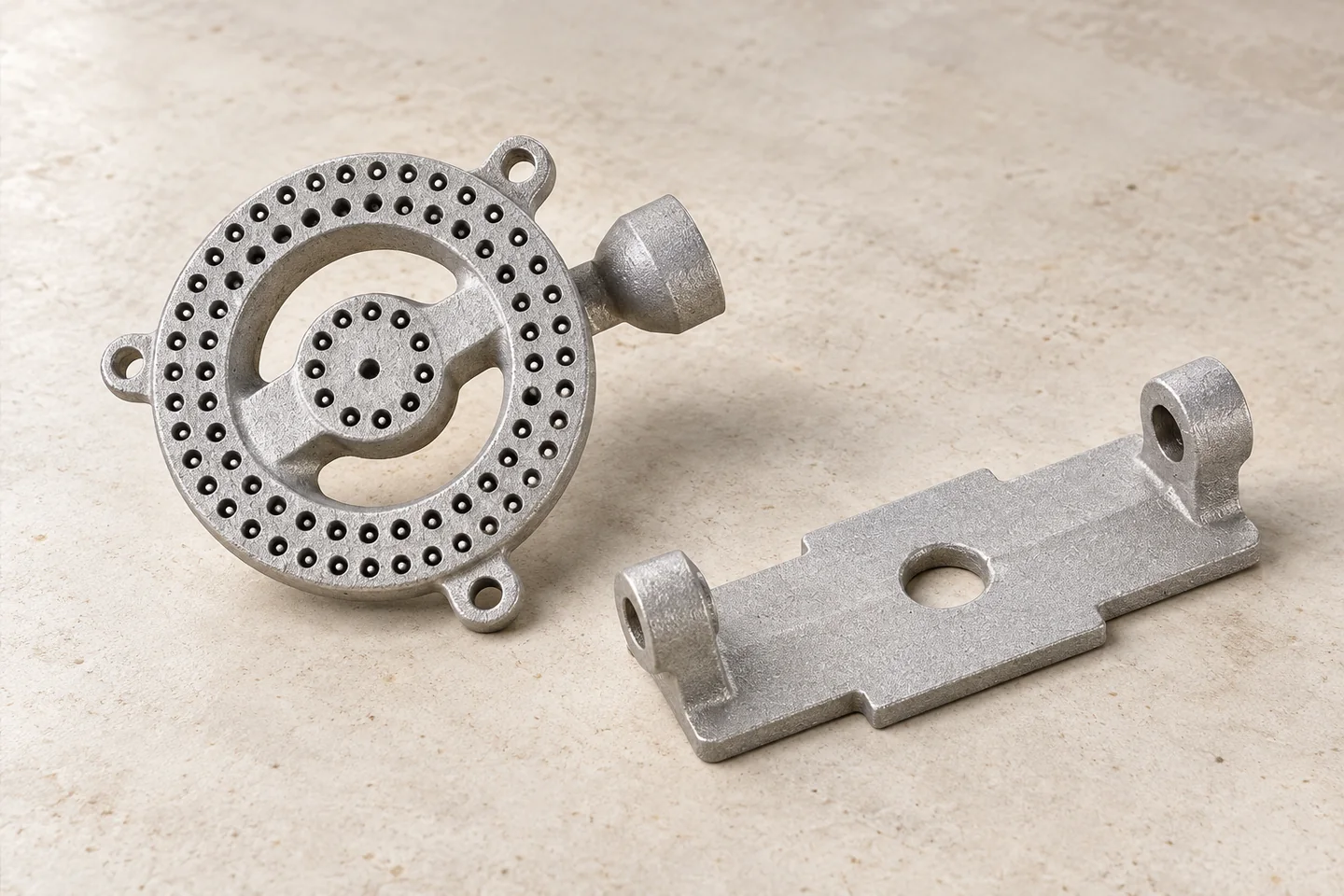
- MountSeating faces and fixing patterns.
- WorkThe actual wear, cutting or moving region.
- SupplyA defined component and accepted condition.
The Equipment Interface Identifies the Part
Relia’s agricultural catalogue includes ductile-iron mounting parts, windowed panel enquiries and combine-harvester knife guards. Their purpose and geometry differ. Identify the actual machine interface, mating components and drawing revision. A component with similar holes or two prongs is a reference for discussion, not automatic proof of replacement fit on a particular harvester or implement.
- SupportLoaded contact and mounting plane.
- PanelWindows, openings and frame attachment.
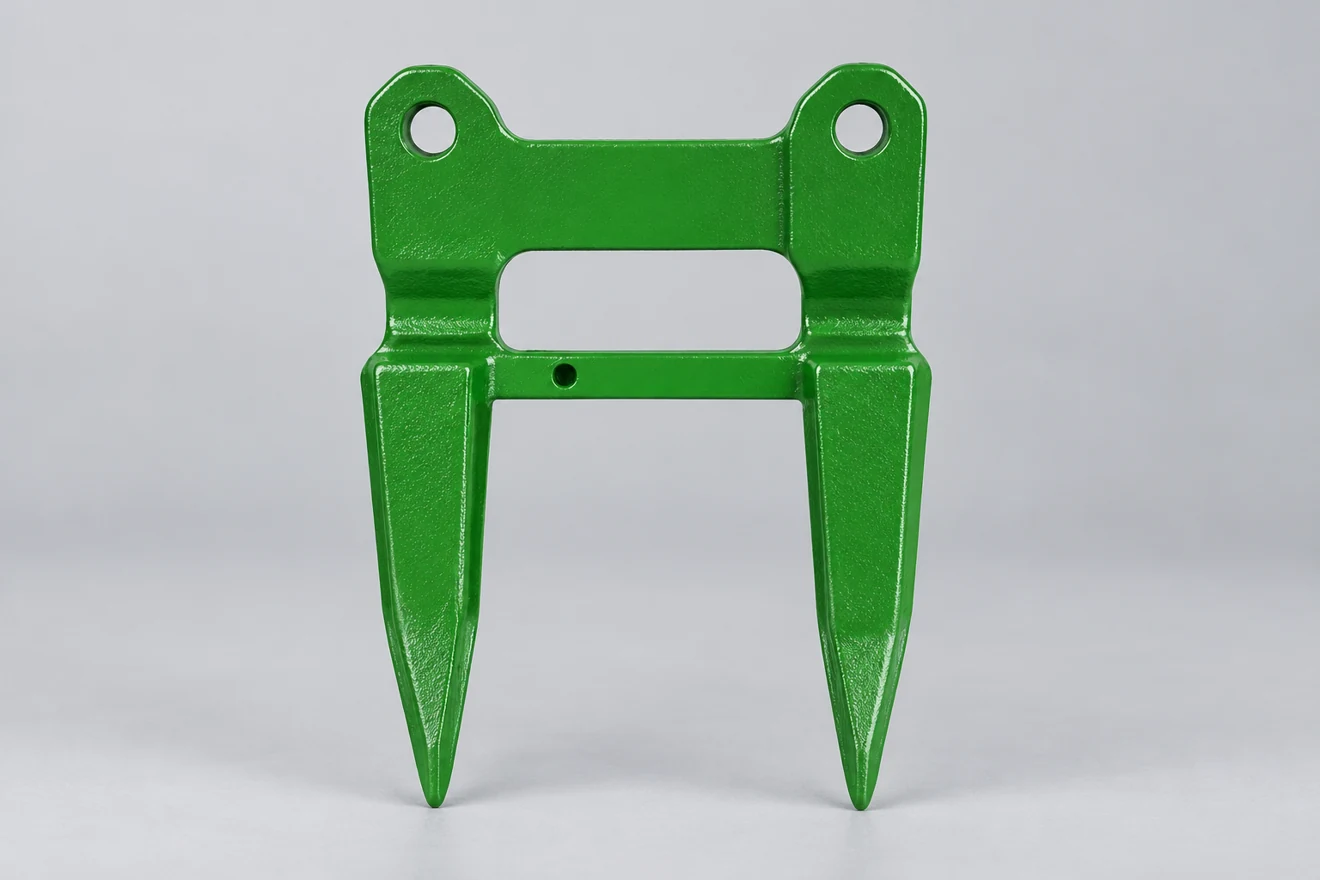
- GuardBlade path, clearance and fixing geometry.
Wear and Impact Need a Specific Material Brief
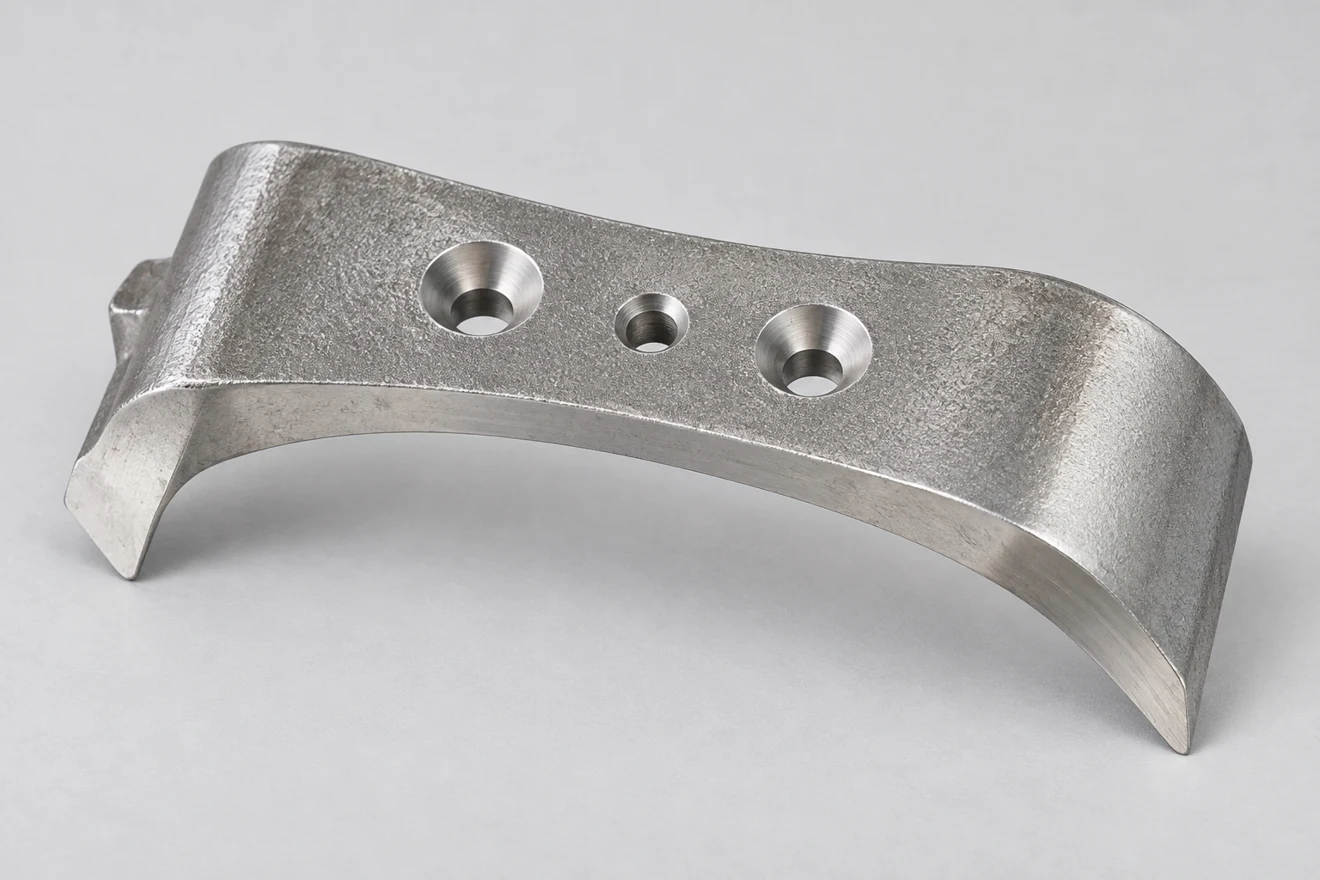
Soil abrasion, impact and outdoor exposure affect different parts of the component. Mark the wearing region and load direction before choosing the grade and condition. Ductile iron, cast steel and forged steel are distinct proposals requiring the actual material specification. A harder surface is not automatically the right solution for a part that also needs a defined impact response or stable mounting contact.
- WearThe surface actually contacting abrasive material.
- ImpactThe loaded direction and relevant material requirement.
- ExposureThe environment affecting protection and delivery.
Knife Guards Connect the Blade Path with the Mount
The knife-guard reference belongs to this site’s catalogue. Its useful brief includes the blade profile, travel envelope, required clearances and mounting arrangement. A worn sample may no longer represent the intended contact. Relate the guard’s working regions to the fixing datum so material forming and later finishing preserve the actual blade relationship.
Show the actual motion envelope and required working clearance.
Define its relationship to the blade from the controlled part geometry.
Locate seating faces and fixing positions that establish the guard in use.
Use the intended design, blade and installation information together. A worn sample or a similar two-prong outline may not preserve the required clearance.
Panels and Supports Need Different Casting Sections
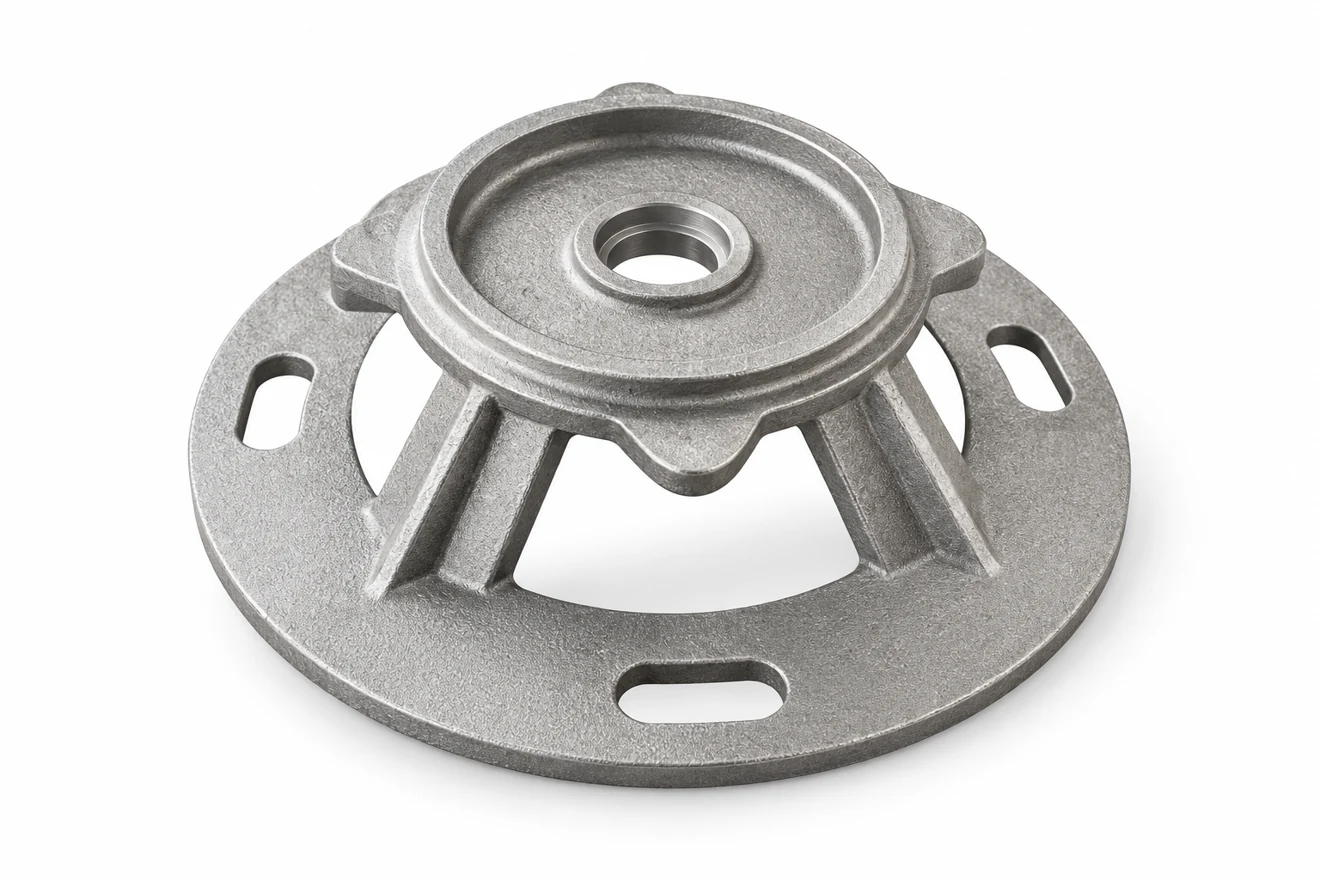
A broad panel with windows raises pattern handling and face-support questions. A loaded support raises lug, web and rib-junction questions. Show the relevant sections rather than assuming that a common agricultural application makes the same blank route suitable. The finished holes and contacts must remain achievable after casting cleanup and any affecting processing.
- PanelOpening bridges and broad-face stability.
- SupportLocal sections connecting loaded contacts.
- Final cutsStock at the actual working interfaces.
Finish Protection Stops at the Required Fit
Outdoor protection can require a specified coating, but fitted bores and working contacts may need masking or another controlled state. Keep the coating requirement separate from wear or hardness acceptance. The final inspection stage should represent the actual delivered component, including any surface work that can alter clearances or seating.
- ExteriorThe specified protective system.
- Working regionThe actual wear or mating requirement.
- Final stateDimensions accepted after affecting operations.
Sample Approval Uses the Mating Arrangement
For a mounting part, check the seating plane and related fixing pattern. For a guard, check the geometry relevant to the blade path. For a panel, check the openings against the attachment references. Relia agrees the sample criteria with you and arranges batch production after your approval, with key-dimensional records and sampling defined per order.
- IdentifyActual equipment interface and revision.
- CheckThe contacts determining installation or movement.
- ApproveThe accepted sample for the ordered version.
Packing Protects Lugs, Edges and Finished Contacts
Field components can be heavy relative to their projecting features. Avoid part-to-part loading on lugs, guard prongs or machined openings during transport. Keep drawings and part numbers separate when several variants share an order. A readable packing and identification plan helps your receiving team preserve the accepted fit before the parts reach the machine.
- SupportThe main body rather than vulnerable projections.
- SeparateDifferent variants and finished contacts.
- IdentifyPart numbers and relevant delivery references.
Follow the Actual Agricultural Buying Path
The guard page develops blade and mounting procurement. The panel page focuses on windowed lost-foam designs, while the support guide concentrates on ductile-iron load paths. These pages cover distinct component tasks instead of repeating broad farm-equipment capability claims.
Contact the Casting Team
Send the actual equipment interface, component drawing or sample, selected material and quantities. Mark blade clearance, wear contacts and mounting dimensions where relevant.
Qingdao Reliacasting Co., Ltd.
Drawing-based metal castings and CNC-finished OEM components from China.
Qingdao officeNo. 96 Shuyuan Road
Qingdao, Shandong, China
Arrange a project visit with us before travelling.
The released drawing, selected material and agreed order define the supplied component and required acceptance evidence.