
Shell Mold Casting for Repeat Iron Components
Relia reviews shell molding for drawing-based iron supports, frames and flanged components. For repeat orders, compare the pattern and core-box investment with recurring cleaning, machining and inspection work. Specify whether you need a complete shell mold, shell cores in another mold system, or a comparison of routes.
Discuss your repeat iron-component order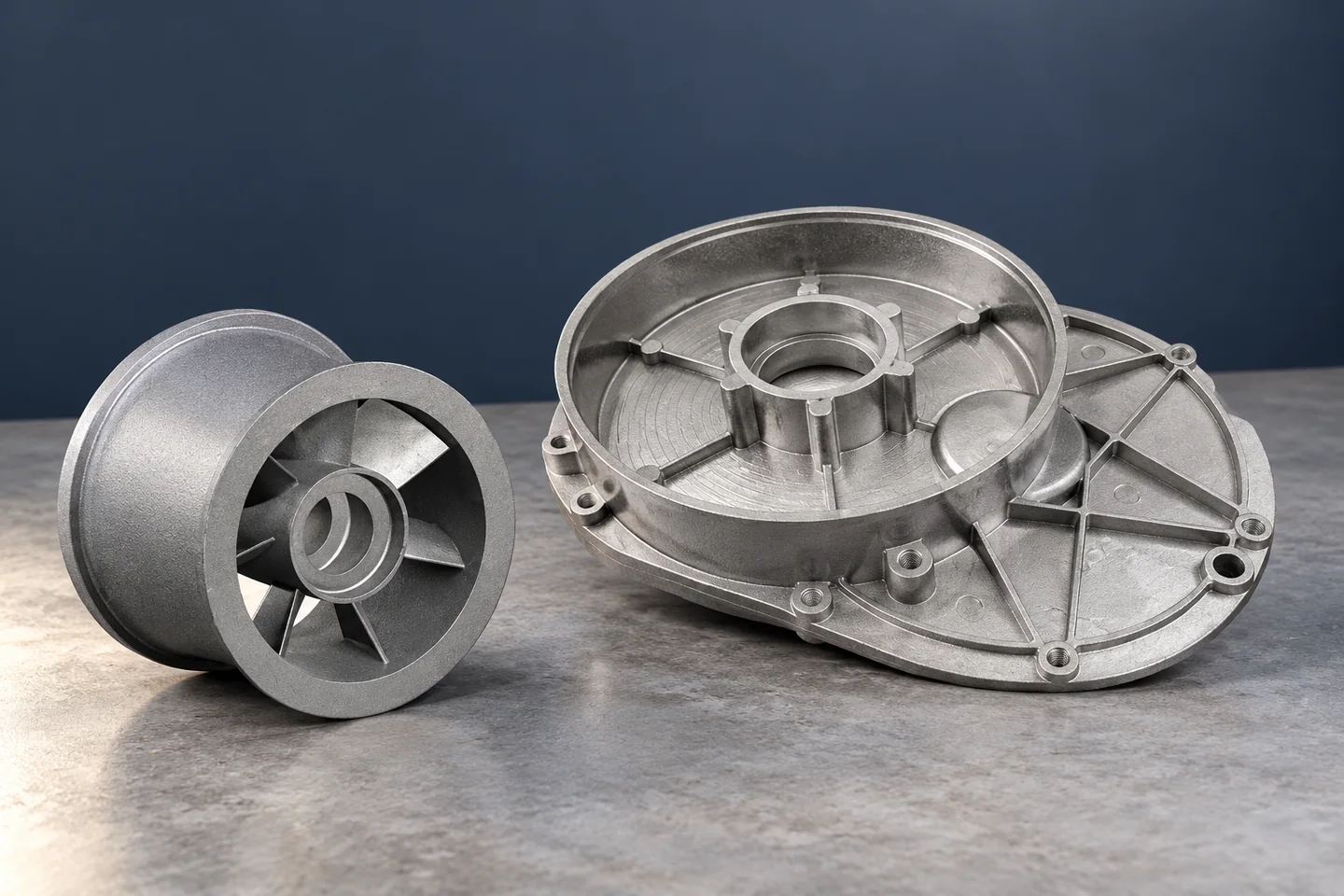
- ToolingPattern and core-box scope.
- Repeat demandStable drawing and expected releases.
- Finished partThe stock, cleaning and CNC work still required.
Repeat Demand Gives the Tooling a Purpose
Relia reviews the hub supports, frames, flanged forms and multi-opening blocks shown in the catalogue against the actual iron specification and quantities. A dedicated tool can support repeat molding, but that decision belongs beside the cost of core work, cleaning and machining. We compare the complete supplied component rather than assuming a route name guarantees every final dimension.
- Initial workPattern, core boxes and development trial.
- Recurring workMolding, metal, cleanup and CNC.
- Change exposureFeatures likely to change before repeat orders.
The Mold and Core Have Separate Responsibilities
The outer mold defines the component’s exterior and parting relationship. A core defines a cavity or opening that needs a separate forming element. Specify whether the proposal covers shell molds, shell cores inside another mold system, or both. That distinction affects tooling, the region being controlled and what the buyer is actually comparing.
Defines outside form and the relationship at mold closing.
Defines a cavity or opening; its seating controls the internal position.
Mold Closing and Core Seating Affect the Same Part
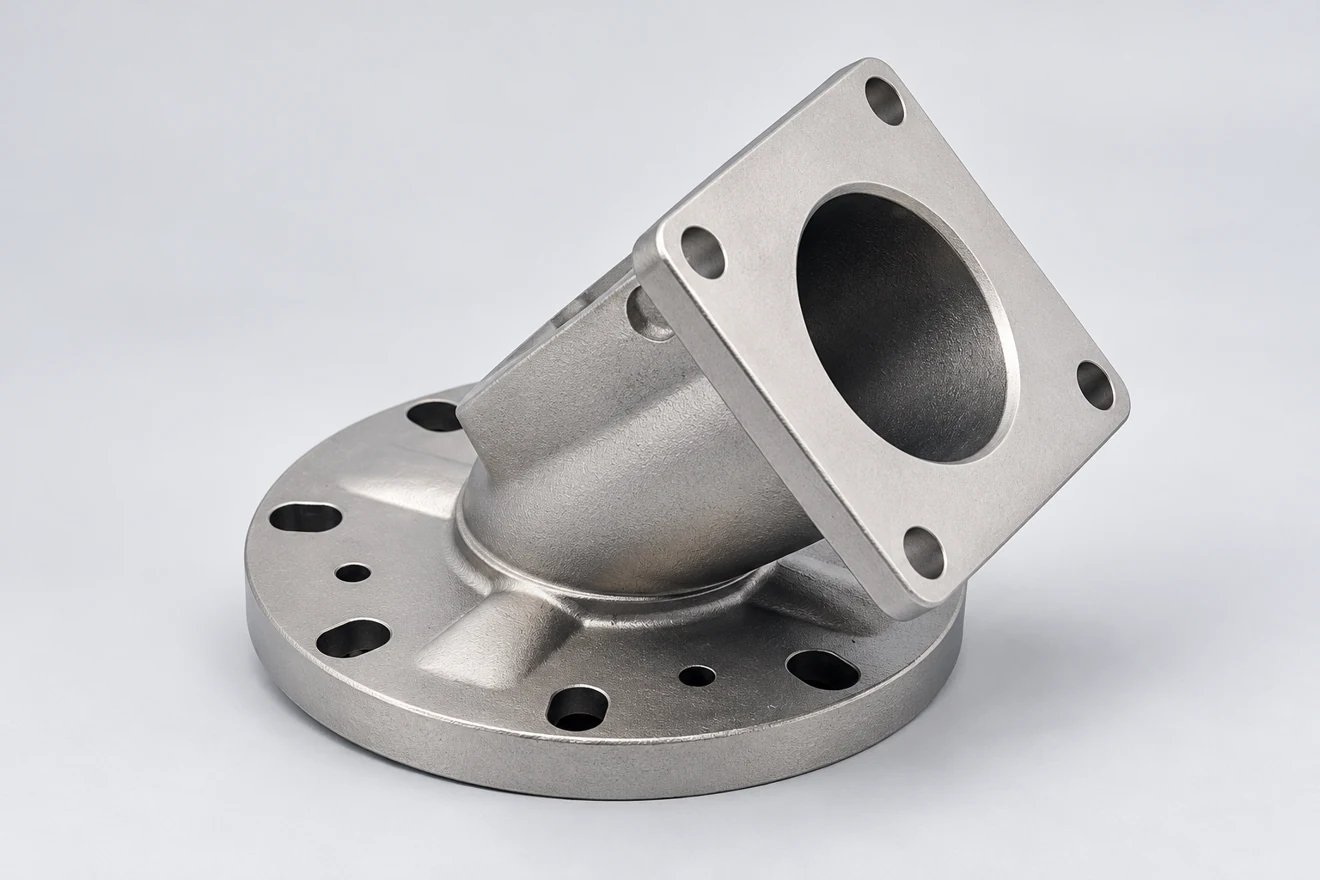
A flanged neck or bored block needs its internal geometry related to the outside mounting contacts. Mold mismatch and core displacement can change local cleanup or available wall after machining. The review should therefore connect parting location, core seats and machining stock. A broad outside tolerance cannot replace local limits at an important seat or bore.
- PartingAllowed dividing line and mismatch region.
- Core positionInternal shape relative to the mold.
- Working contactMaterial left for the finished face or bore.
The Actual Iron Grade Remains a Separate Choice
The catalogue accepts grey- and ductile-iron component enquiries. Choose the actual specification and required condition for your design. A change from grey to ductile iron affects more than a material label: the required properties, sections and process review must follow the new requirement. Earlier sample acceptance should not silently carry over to a changed material programme.
- SpecifyActual iron grade and acceptance requirements.
- ReviewGeometry and processing for that metal.
- ReapproveAffected sample evidence after a material change.
Ribs and Enclosed Spaces Need Practical Access
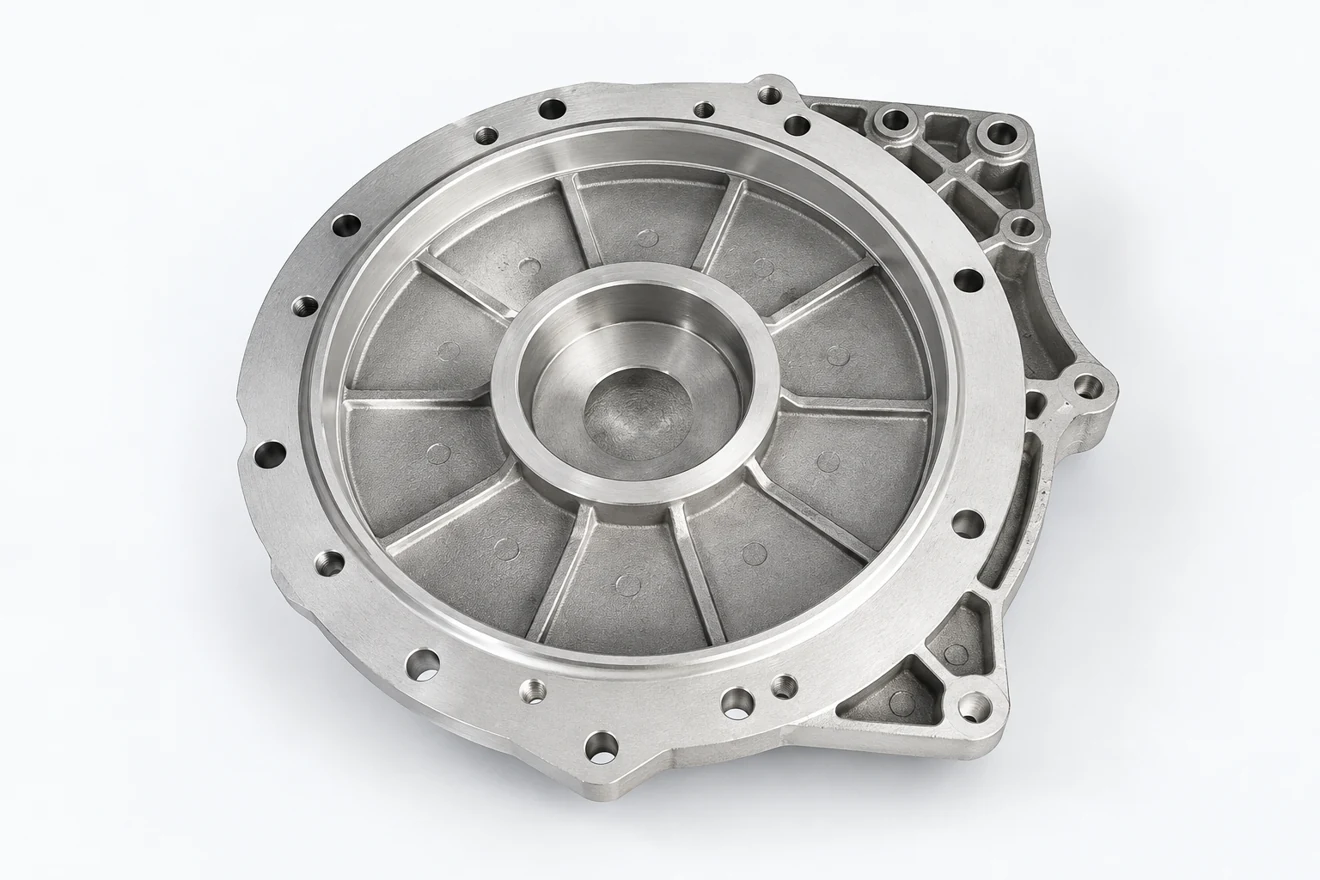
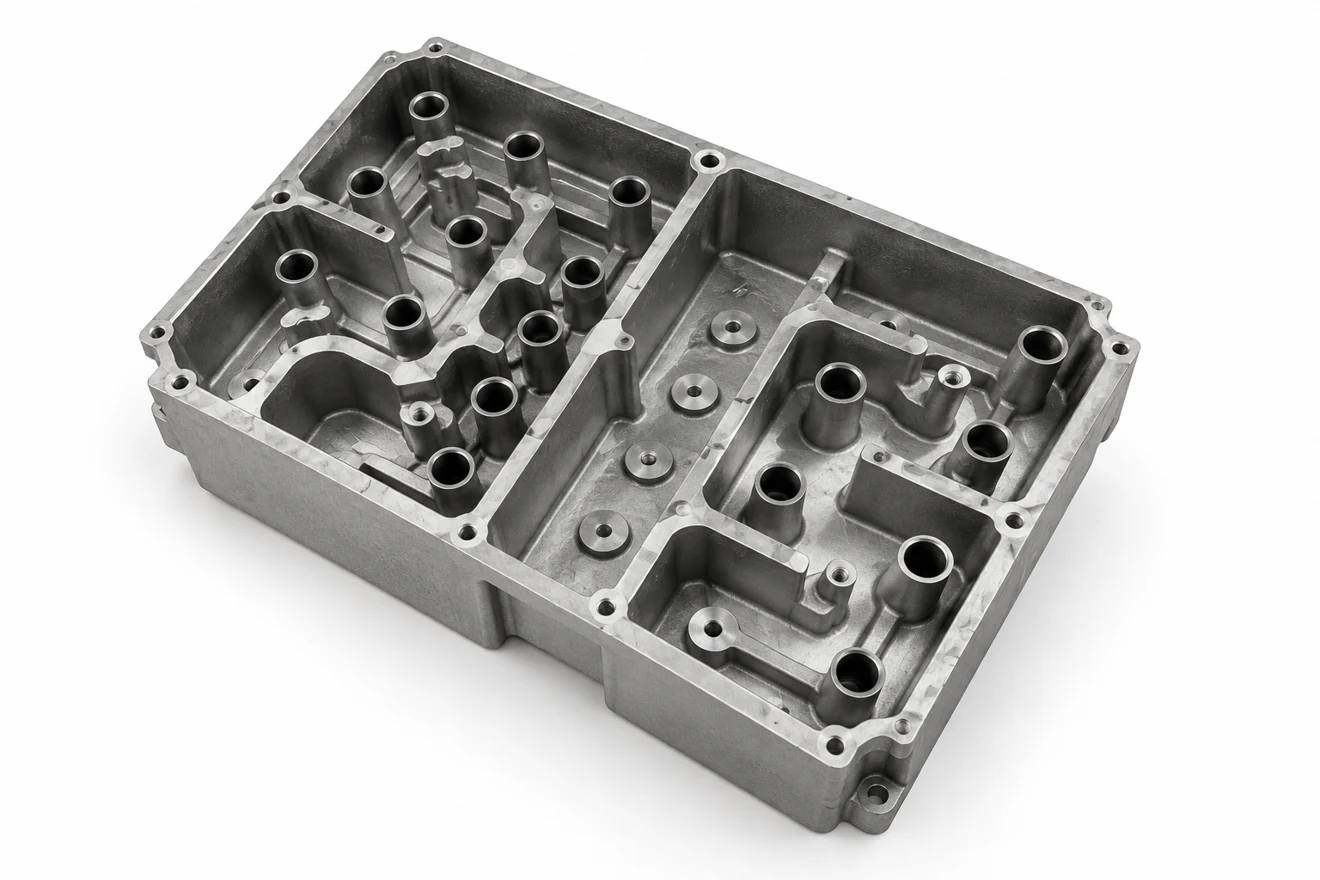
A thin rib joining a heavier frame needs a workable section transition and filling route. A hollow or compartmented part still needs access for removing mold material and for the agreed inspection. The ribbed-cover example illustrates how closely spaced geometry can improve the shape’s purpose while making cleanup or tool access more demanding.
- Rib junctionThickness change and nearby heavy sections.
- OpeningCleaning and inspection access.
- MachiningCutter reach and stable supports.
Surface Treatment Respects the Final Fits
When zinc plating or another surface operation is requested, identify the actual coating specification and the regions it covers. A bore, thread or seating face may need masking or a final dimension accepted after coating. A plated appearance is not itself a corrosion rating, and coating does not resolve an unacceptable cast discontinuity beneath it.
- CoatThe specified exterior or protected region.
- MaskWorking contacts excluded by the drawing.
- AcceptThe required final size and surface condition.
Repeat Supply Uses an Identified Tooling Reference
The accepted drawing, tool condition and first-off checks stay connected when production repeats. A worn parting edge or a modified core box can affect local geometry even when the part number remains familiar. Agree the sample and release checks that matter to the component, with key-dimensional records and sampling defined for the actual order.
- ToolingIdentified pattern and core-box configuration.
- First offThe critical features checked at the new release.
- DeliveryFinished geometry and agreed surface state.
Separate Process Selection from Detailed Component Checks
Use the route comparison for shell molding versus conventional sand casting. The component pages cover supports, blocks and frames, while the smaller notes explain full molds versus shell cores and local mismatch near finished seats. These are related decisions with distinct answer pages.
Contact the Casting Team
Send the iron specification, component drawing, expected order pattern and final contacts. State whether the request covers full shell molds, shell cores or a route comparison.
Qingdao Reliacasting Co., Ltd.
Drawing-based metal castings and CNC-finished OEM components from China.
Qingdao officeNo. 96 Shuyuan Road
Qingdao, Shandong, China
Arrange a project visit with us before travelling.
The released drawing, selected material and agreed order define the supplied component and required acceptance evidence.