
Ductile Iron Castings for Loaded Supports and Brackets
Relia supplies drawing-based ductile-iron brackets, supports and hub components. We review the selected grade and condition alongside the load path, cast sections and finished bores or mounting faces. Your mating assembly identifies the contacts that need machining and the material evidence required for acceptance.
Send the support drawing and material requirement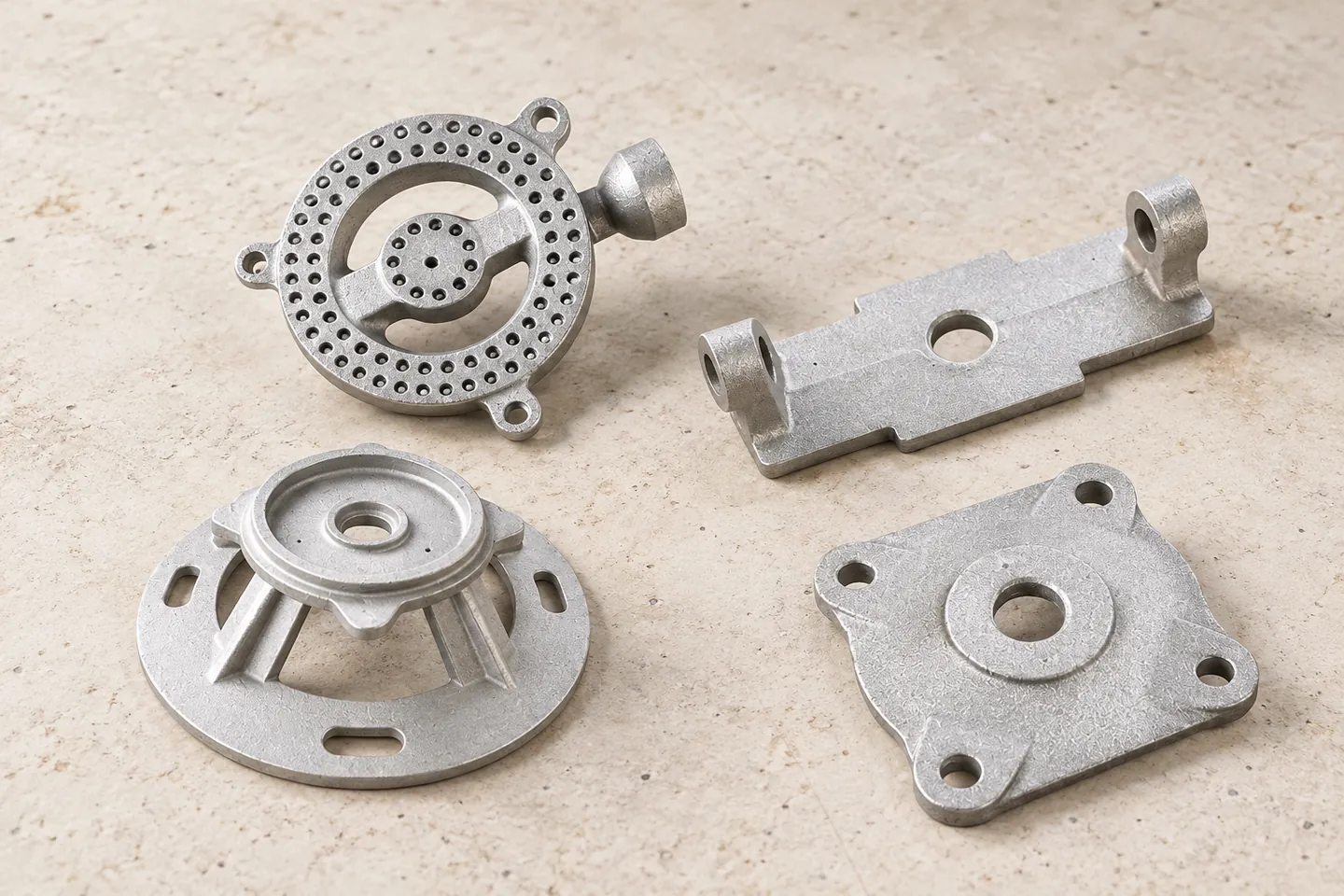
- Load pathThe contacts and sections carrying the duty.
- MaterialSpecified grade, condition and property evidence.
- FitRelated holes, bores and mounting faces.
The Loaded Contacts Give the Drawing Its Priorities
Relia’s support-base and agricultural-component catalogue provides several starting geometries: lugs, ribs, bored supports and mounting plates. Identify which part you need and where its load enters and leaves the component. A clearance hole, a pivot bore and a seating pad require different finishing. We use the mating assembly to separate those roles before selecting a casting and CNC plan.
Identify the surface that receives the working load.
Show the section and transition connecting the contacts.
Define the support reference in the adjoining assembly.
Nodular Graphite Changes the Material Behaviour
Ductile iron is also called nodular or spheroidal-graphite iron. Its graphite form differs from the flakes in grey iron, supporting a different strength and ductility balance. That distinction does not select the finished grade for you. The actual specification, required properties and section-sensitive checks remain attached to the drawing; a catalogue list such as GGG40, GGG45 and GGG50 contains alternatives, not one common material.
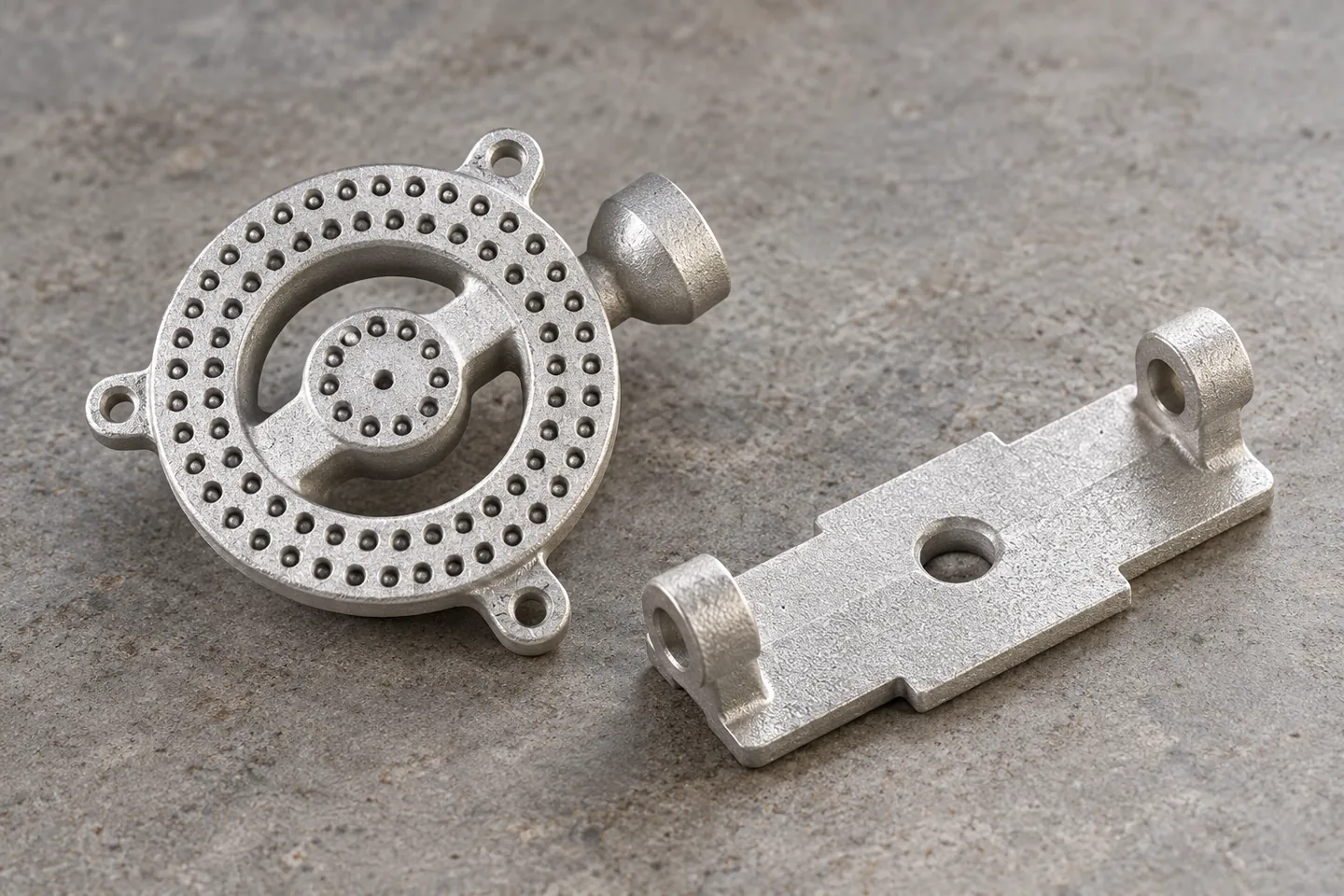
- SelectOne applicable grade for the ordered part.
- StateThe required condition and properties.
- VerifyMaterial evidence appropriate to the specification.
Lug and Web Transitions Need a Practical Shape
A hole close to a thin web can concentrate the manufacturing and service questions in the same small region. Show the lug section, surrounding radii and adjoining wall on the drawing. A smoother transition may be worth reviewing, but it must preserve the mating envelope and intended duty. The casting proposal and the designer’s structural requirement stay connected instead of assuming more local metal solves both.
- LugBore wall and adjoining contact.
- TransitionRadii and change of section.
- WebA continuous path to the mounting region.
The Bores and Seat Need One Meaningful Datum System
For a support base, machine and inspect the bore relative to the seating surface used in the assembly. For a pivot bracket, include paired-bores and gap requirements where applicable. The fixture should support the real casting without bending a web to obtain an apparently correct measurement. The final result needs to represent the released part in its specified condition.
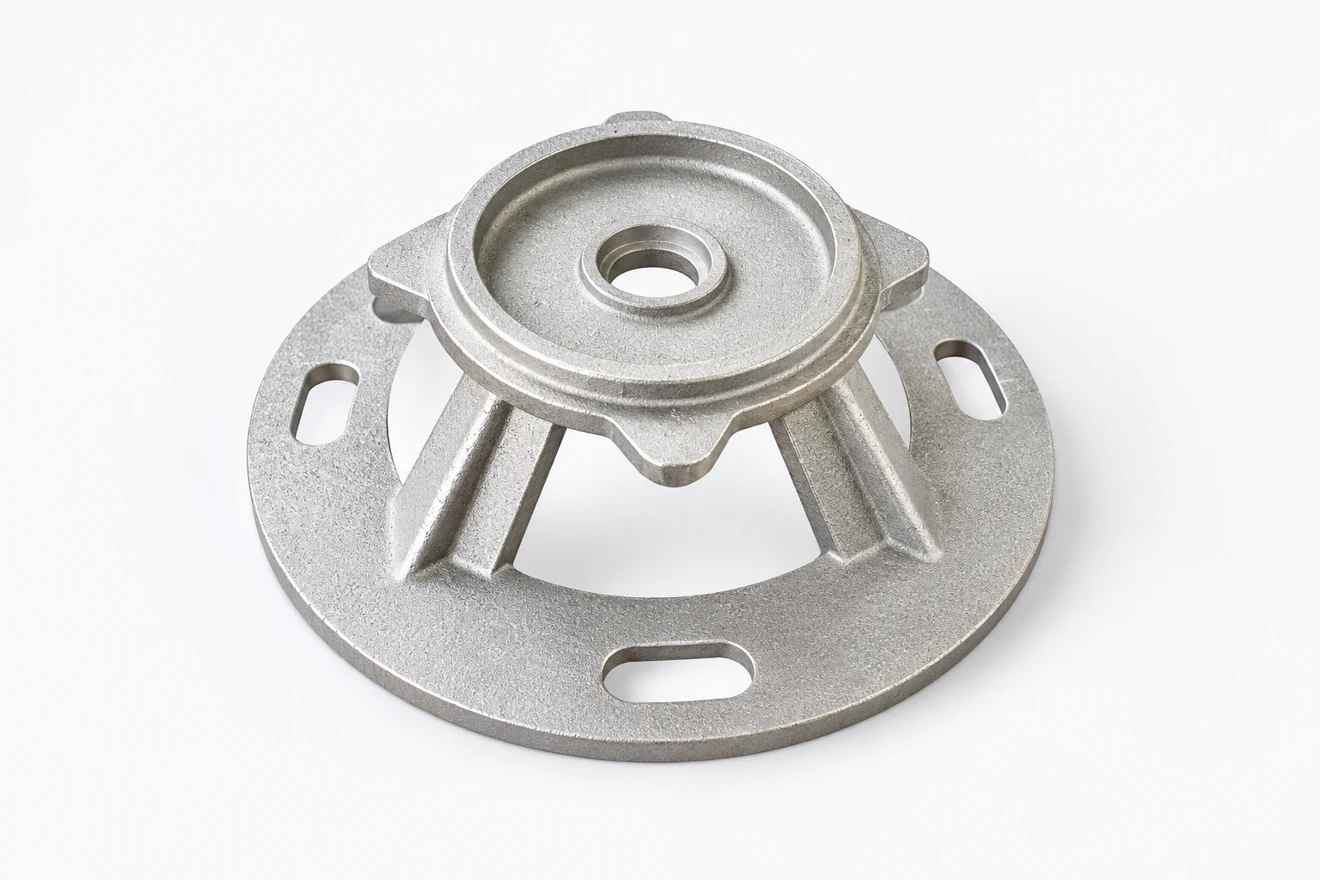
- SeatThe installed support reference.
- BoreSize, position and orientation.
- StateThe free or supported measurement condition.
Wear and Impact Need Different Requirements
An agricultural mounting part exposed to soil or impact is not fully described by the phrase wear resistant. Identify the actual wearing face, impact direction and environment. A harder condition may change machining or toughness considerations; a protective coating serves another purpose. Relia reviews the requested material and operations against those named regions rather than assigning a universal service-life claim.
- AbrasionThe contact actually exposed to wear.
- ImpactThe load direction and required material behaviour.
- EnvironmentExposure influencing the chosen protection.
Coating and Handling Protect the Accepted Fit
A painted support still needs its fitted bore and seating face in the required condition. Mark masking boundaries and any final cuts on the drawing. Separate parts in packing where lugs, edges or machined contacts could strike one another. Material identification and part numbers should remain readable through that delivery preparation.
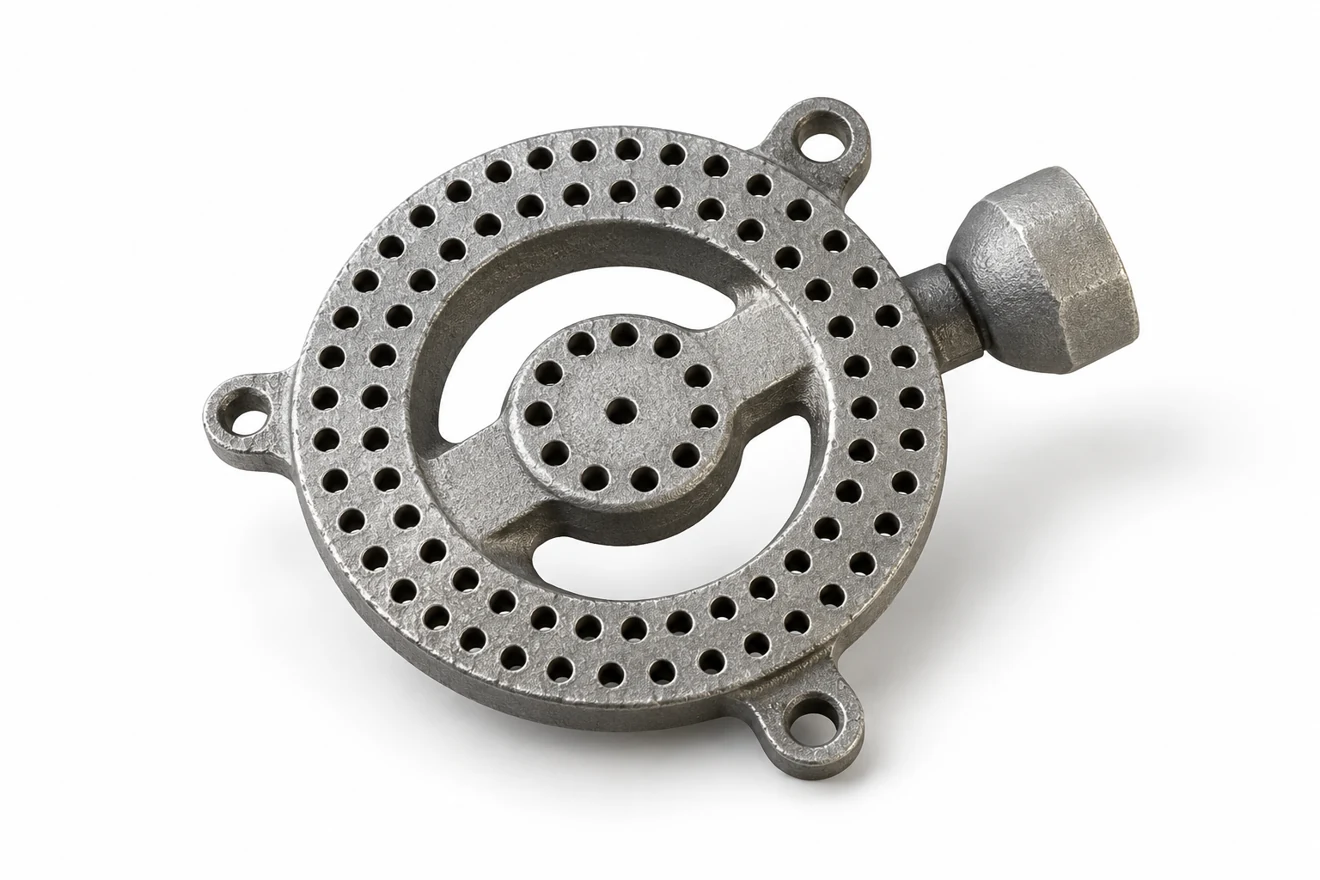
- ExteriorThe specified protective finish.
- FitControlled contacts and any masking.
- PackingSupport and separation around vulnerable geometry.
Sample Approval Covers Material and Assembly Geometry
The sample review checks the relevant material requirement and the working contacts separately. Key dimensions can be documented with sampling agreed for the order. A later change of grade, lug shape or bore location receives an affected-feature review because it can alter tooling, machining and acceptance. Relia arranges batch production after your approval of the agreed sample basis.
- Material basisSelected grade and required property evidence.
- Geometric basisThe relevant bores, faces and relationships.
- Repeat basisReleased revision and approved sample.
Choose the Support or Process Review You Need
Use the support-base page for a complete order, the shell-mold material-change page for a grey-to-ductile conversion, or the rib-junction note for a local geometry concern. These pages answer distinct questions while keeping the same component definition.
Contact the Casting Team
Identify the actual ductile-iron grade, loading contacts, mating assembly and finished dimensions. Add the material and sample evidence required for your support.
Qingdao Reliacasting Co., Ltd.
Drawing-based metal castings and CNC-finished OEM components from China.
Qingdao officeNo. 96 Shuyuan Road
Qingdao, Shandong, China
Arrange a project visit with us before travelling.
The released drawing, selected material and agreed order define the supplied component and required acceptance evidence.