
Stainless Steel Castings for Fittings and Mechanical Parts
Relia supplies drawing-based stainless cast fittings and mechanical parts. Tell us the actual fluid or environmental exposure, cast-grade requirement and working contacts. We connect casting access, CNC finishing and the specified surface condition, so a bright appearance is not mistaken for proof of alloy, corrosion performance or application approval.
Review your stainless component and exposure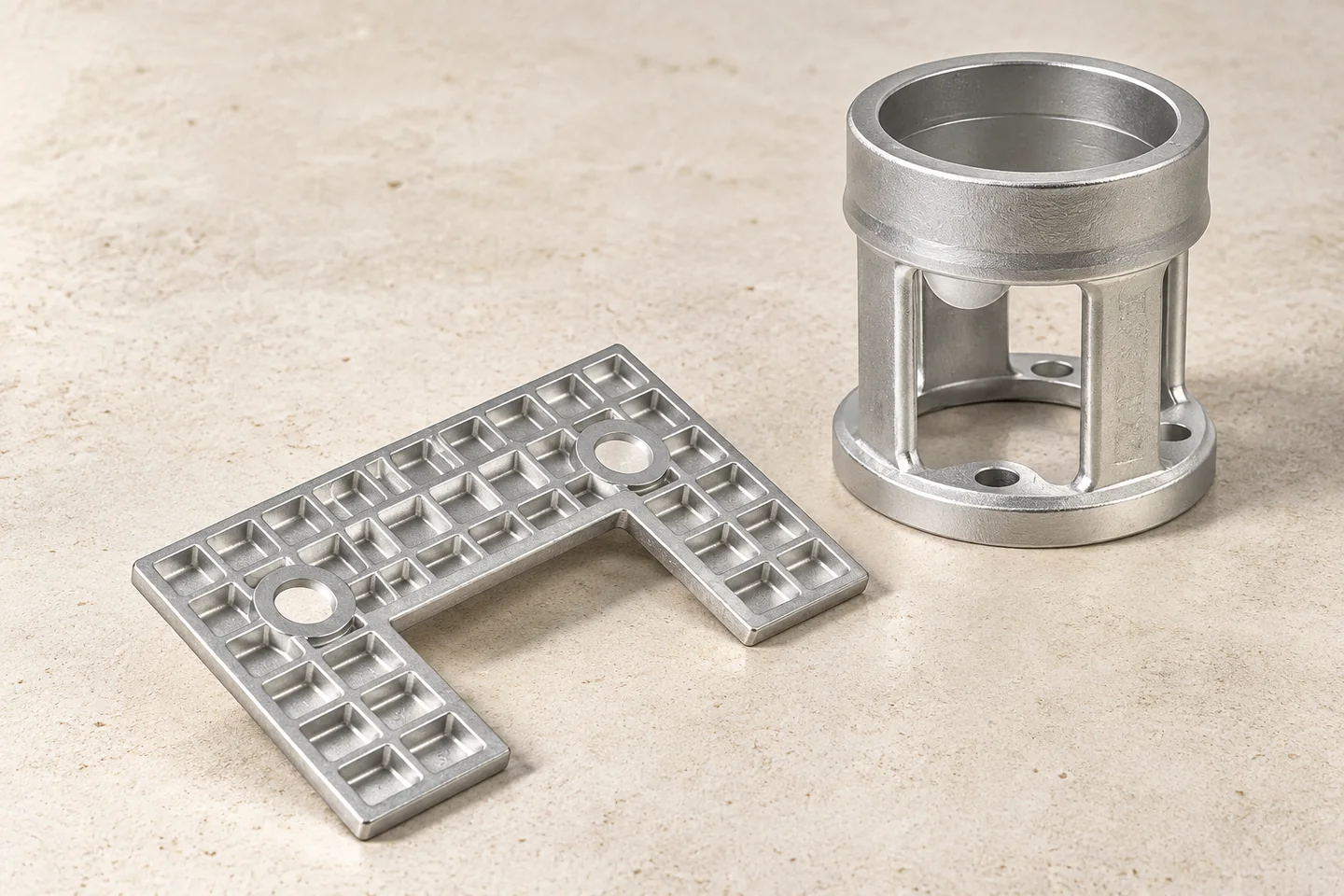
- ExposureFluid, temperature, cleaning and surroundings.
- MaterialThe selected cast specification and condition.
- SurfaceSealing, moving and visible regions defined separately.
The Service Brief Leads the Material Discussion
Relia reviews stainless valve-body forms, hollow connectors, hinges and mechanical castings as individual parts. State the actual medium or exposure and the function of the important surfaces. Chlorides, temperature, trapped liquid and cleaning practices may affect the selection. A dry bracket and a wetted body therefore need different reviews even when both have a bright appearance.
- EnvironmentActual fluid or surrounding exposure.
- GeometryCrevices, recesses and retained-liquid regions.
- FunctionThe fitted, moving or sealing contact.
Cast and Wrought Names Need an Approved Relationship
Catalogue references to 304, 316 or 17-4 PH identify a sourcing direction. The purchase specification should identify the actual casting grade, applicable document and delivered condition. Cast and wrought compositions are not automatically identical; any proposed substitution needs approval against the intended requirement. Material identity comes from the agreed evidence, not colour, reflectivity or a casual magnet check.
- Drawing nameThe material currently requested.
- Casting proposalThe actual grade and product specification.
- ApprovalThe accepted material and condition for production.
Thin Walls and Deep Recesses Need Different Reviews
A thin rib needs a viable filling path and section; a deep cup or hollow connector needs access for mold-material removal and later cleaning. Show both on the model and sections rather than treating them as one general precision issue. We review the selected geometry, proposed investment route and local finishing stock before committing to the tool.
- Thin regionWall, rib and nearby section transitions.
- Deep regionAccessible cleanup and cutter approach.
- Working contactThe material reserved for final machining.
Cleaning, Passivation and Polish Serve Different Purposes
Machining creates the specified geometry; cleaning removes the agreed contamination or residues; surface treatments and polishing address their own specified requirements. A mirror-like face does not establish alloy identity, hygienic acceptance or pressure integrity. Identify the surfaces involved and the required final state, including areas where cosmetic work must not round an edge or alter a fit.
A Fitting Connects Passage Geometry with End Interfaces
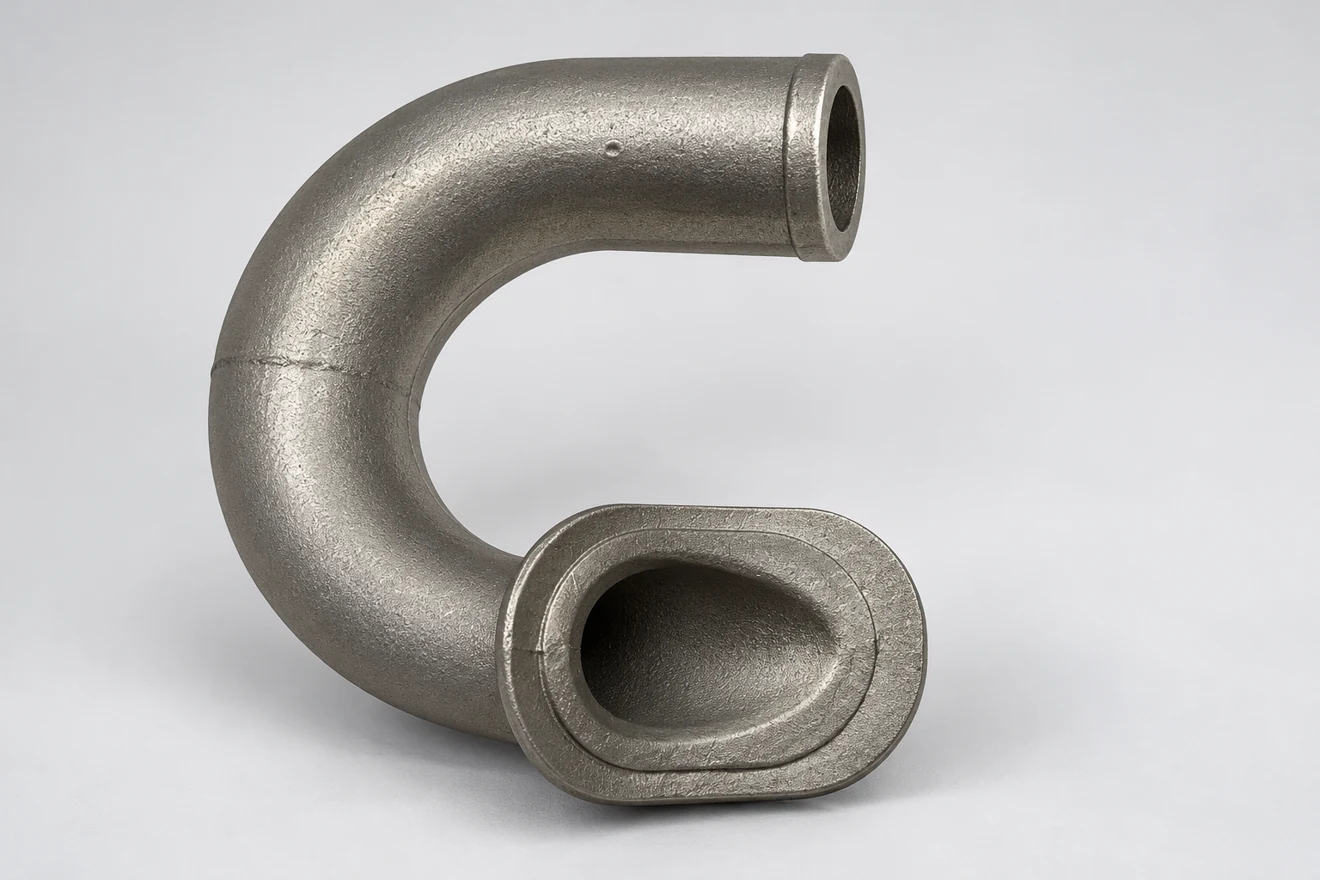
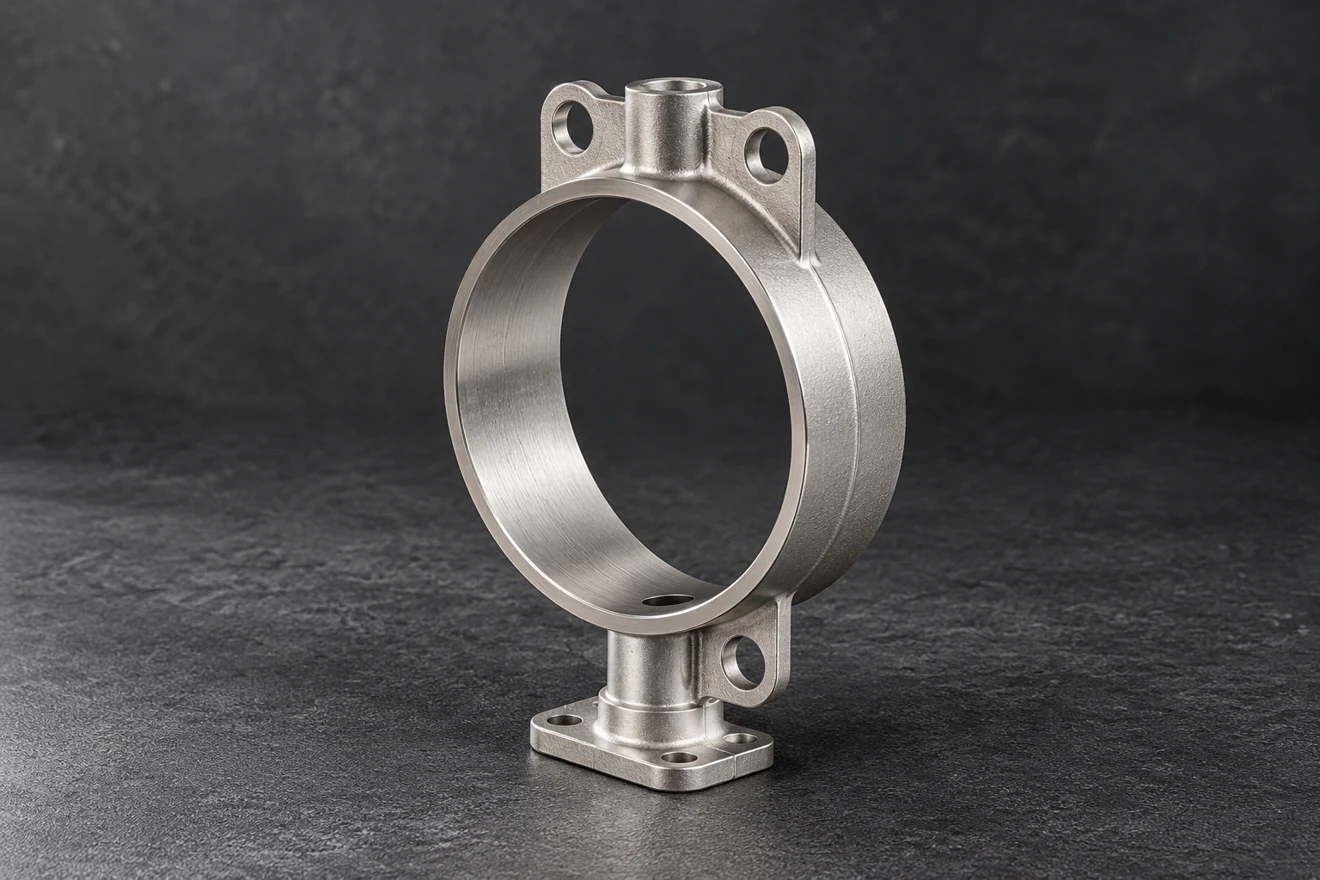
The hollow-elbow and valve-body references show why internal form matters alongside the outside ends. A bore, thread or seating face needs its position and orientation related to the passage and mating drawing. Intersecting machining may create internal burrs, while a recess can trap residue. The finishing scope follows those regions before the component is accepted for its actual use.
- PassageSection, internal access and cleaning route.
- End contactThread, bore, seat or flange.
- Final boundaryThe actual supplied body and separate test scope.
A Hinge Separates Movement from Appearance
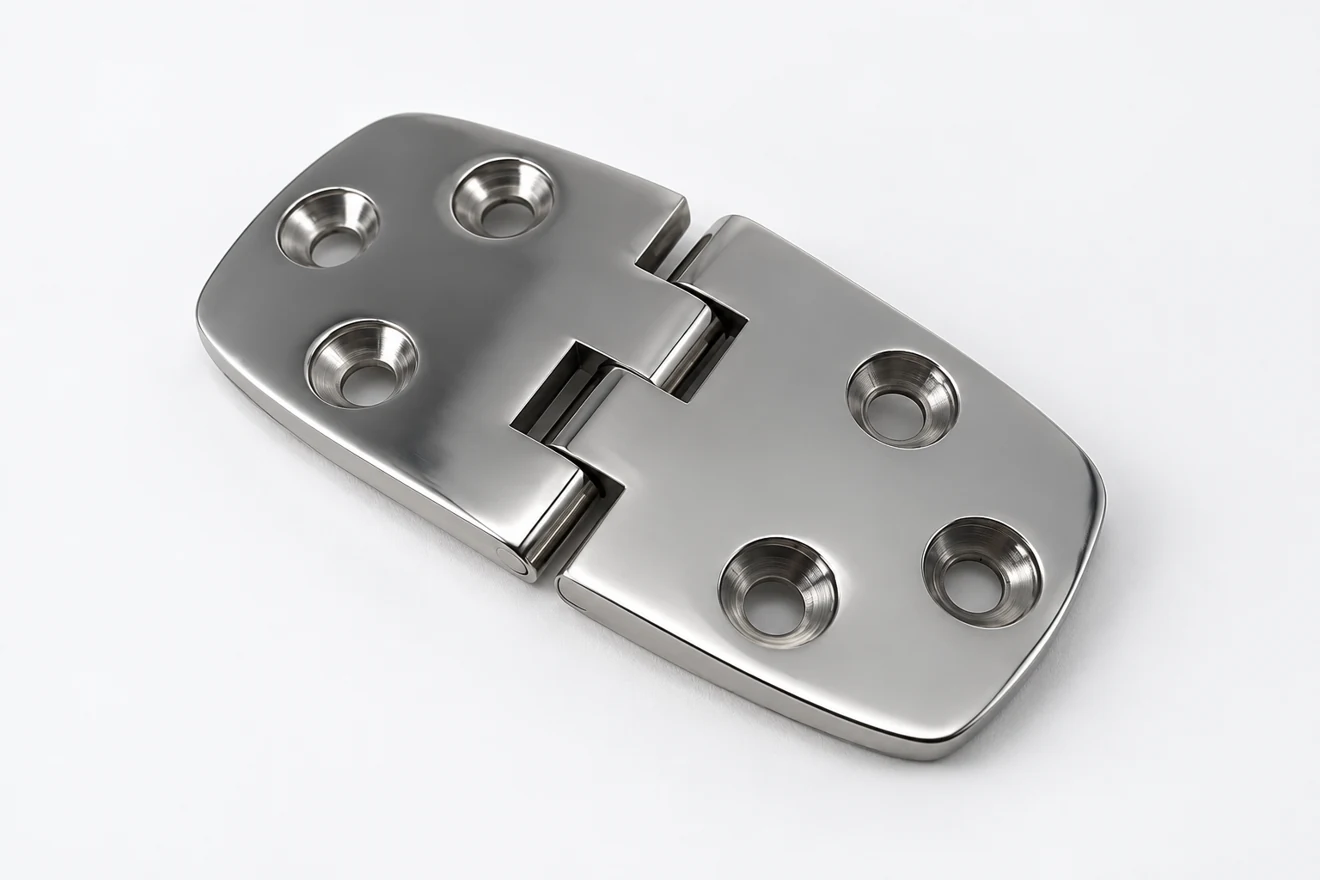
For a hinge or clamp, identify the pivot, leaf faces, mounting pattern and any pin or companion hardware. The visible exterior can have an appearance requirement while the joint needs its own clearance and edge condition. Finishing should preserve those working relationships. The photograph is a geometry reference; load, cycle-life or installation approval needs the relevant design and evidence.
- MovePivot relationship and required clearance.
- MountFixing pattern and leaf contact faces.
- FinishVisible regions without changing the working fit.
Final Acceptance Uses the Delivered Surface State
State the dimensions, surface requirements and measurement stage that apply after the affecting operations. Material records and agreed key-dimensional results should describe the actual component revision. Protect the finished regions from damage or contamination during handling and packing. Relia agrees the sample basis with you and arranges batch production after your approval.
- IdentifyActual grade and released component revision.
- InspectCritical contacts in the specified final state.
- PreserveThe accepted condition through delivery.
Open the Material or Component Detail You Need
The material page supports selection across stainless component families. The detailed guides isolate a valve-body order, a hollow connector, a hinge or a particular material condition, avoiding several pages competing to answer the same broad stainless question.
Contact the Casting Team
Send the actual material requirement, service exposure, component sections and final contacts. Mark cleaning, sealing and visible-surface requirements separately.
Qingdao Reliacasting Co., Ltd.
Drawing-based metal castings and CNC-finished OEM components from China.
Qingdao officeNo. 96 Shuyuan Road
Qingdao, Shandong, China
Arrange a project visit with us before travelling.
The released drawing, selected material and agreed order define the supplied component and required acceptance evidence.